‘This Heaven Knew Nothing About Me or A Few Life-Size Ideas for an Exhibition, or Between Earth and Earth, or This Exhibition Gave Me Nothing, or Instead of Bad Confession, or These Are Not Dreams, This Is Art in the Room, or
Nail Print’
venue: Galeria Labirynt, Lublin, Poland
April 24, 2026 — June 28, 2026
curator: Kateryna Iakovlenko
artist: Stanislav Turina
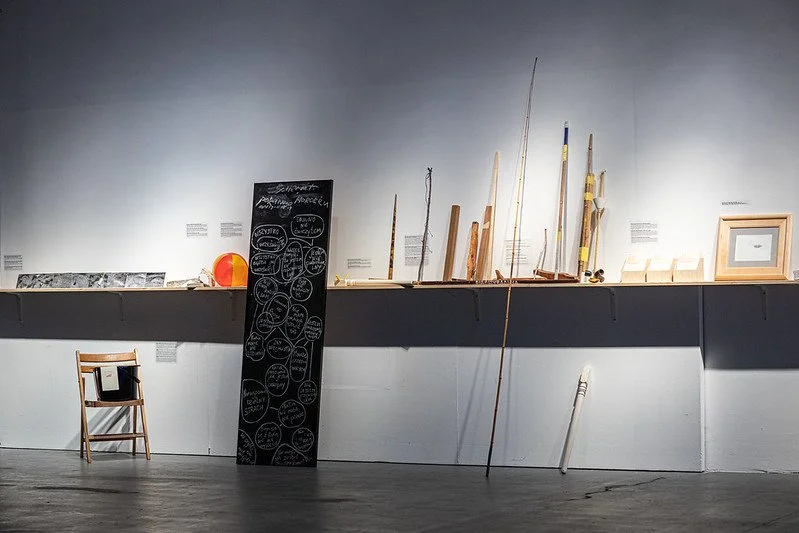
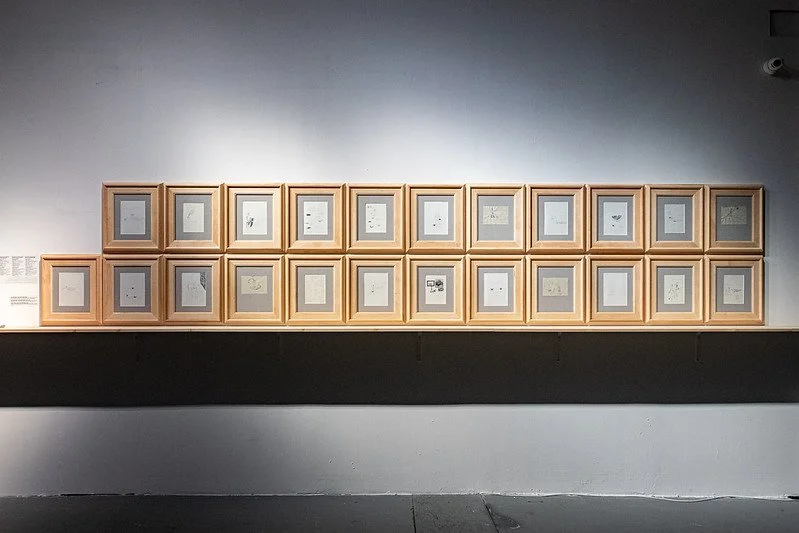
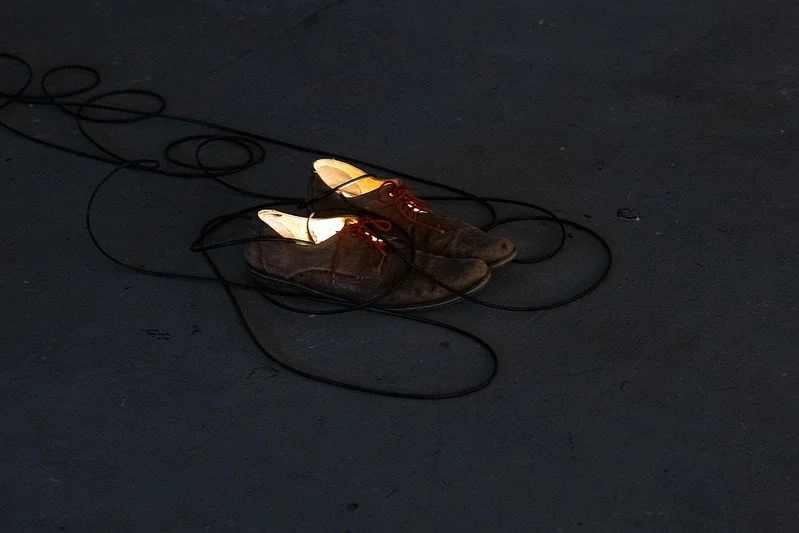
At the heart of Stanislav Turina’s exhibition lies a paradox that echoes throughout human life. It oscillates between light and darkness, between old, ‘archival’ works and works created during wartime, which are not devoid of paradox either. Some of them talk about the war straightforwardly – these are images of bomb craters and the topic of loss; others regard something else – doubt, possibilities and subtle, almost unnoticeable gestures, persisting under the pressure of life in relative safety.
All of these paradoxes and doubts are contained in a multi-layered title which seems to complement and contradict itself at the same time: which name is the right one then? Why is this ‘or’ constantly present?
The exhibition titled ‘This Heaven Knew Nothing About Me or A Few Life-Size Ideas for an Exhibition, or Between Earth and Earth, or This Exhibition Gave Me Nothing, or Instead of Bad Confession, or These Are Not Dreams, This Is Art in the Room, or Nail Print’ emphasizes everyday life by showing the impact of war on the details of the artist’s daily and professional routine.
The exhibition ‘This Heaven… Nail Print’ is a continuation of a Kyiv artistic experiment, initiated by Turina’s six exhibitions, which took place one after another. Then Turina found the nerve to fulfil the ideas he had been hiding in his imaginative artistic drawer – there had been no time or possibility. Some of these ideas were, according to their author, ‘trivial’ because they referred to the reflection on art history and its significance. Turina posed questions: Is there a place for such talks and thoughts during wartime when your friends join the army and give up their practice to defend others? Is such a dramatic moment a good opportunity to launch similar projects and exhibitions?
This laboratory character is continued in a new exhibition. Here at Labirynt, all these works have come together in one space for the first time. The exhibition is complemented by other series and works, including those from the Galeria Labirynt’s collection.
The exhibition also raises questions about safety, distance and time, stretching from the wartime presence to a day that may be called ideal, as it will be free of any loss.
***
Stanislav Turina (b. 1988, Makiivka) – artist, text author, curator and sometimes teacher. He is a co-curator, assistant and artist at ‘Atelienormalno’ (an artistic studio for people with and without Down syndrome). In 2025, he received the Kazimir Malevich Art Award.
He grew up in Mukachevo and graduated from the Glass Art Department of the Lviv National Academy of Arts. He has participated in a series of artist collectives, including Open Group and the Black Circle Festival of street art and graffiti.
He lives and works in Kyiv.
Publication within the exhibition:
Mój idealny dzień / Мій ідеальний день / My perfect day, a poetry collection of Staniclas Turina. Labirynt Galeria, 2026
Read more about the exhibition:
Mariia Varlygina. “Paradoks słońca lub wystawa Stanislava Turiny w Galerii Labirynt”, Miej Miejsce, May 26, 2026, numer 18/2026
Анфіса Дорошенко “Ідеальна виставка Стаса Туріни, або Гніздування припутня, або Чого вчить вирва”, ArtsLooker, 27.05.2026
When I Am In Ukraine, Everyone Asks Me About Poland. When I Am In Poland, Everyone Asks Me About Ukraine
venue: Artsvit Gallery, Dnipro, Ukraine
December 17, 2025 — March 14, 2026
curators: Kateryna Iakovlenko, Stach Szabłowski
artists: Waldemar Tatarczuk, Kateryna Aliinyk, Vlodko Kaufman, Zhanna Kadyrova, Nikita Kadan, Pavlo Kovach jr., Denys Pankratov, Anton Saiienko, Vasyl Tkachenko (Lyakh), Stanislav Turina, Yaroslav Futymskyi
When I am in Ukraine, everyone asks me about Poland. When I am in Poland, everyone asks me about Ukraine is a multilayered solo exhibition by Polish artist and curator Waldemar Tatarczuk, offering Ukrainian audiences an in-depth look at his multifaceted creative identity.
The exhibition marks Tatarczuk’s return to his personal artistic practice after many years of directing Galeria Labirynt in Lublin, a city that is 100 km from the Polish-Ukrainian border, where he focused on fostering the work of others. This experience deeply influenced his artistic language, shaping the key features of his practice: political awareness, attention to others, collaboration, and coexistence. A work which opens the exhibition — Moving Towards East — literally embodies both the political and artistic movement of the artist toward closeness with Ukrainian art, its support, and his continued presence within this cultural space.
The project unfolds in two parts. The first comprises works created in collaboration with Ukrainian artists and long-term friends and colleagues who accepted Tatarczuk’s invitation to engage in joint artistic dialogue. This section echoes the spirit of Galeria Labirynt, which under his leadership became an experimental institution with a distinctly anti-institutional ethos. During times of political and social turbulence in Poland, Labirynt remained active and responsive by following artistic rather than bureaucratic logic. The gallery also played a crucial role in supporting Ukrainian artists and fostering Polish–Ukrainian artistic exchange from the very beginning of Tatarczuk’s tenure.
The second part of the exhibition turns inward, presenting the artist’s individual works and performance documentation. This intimate and reflective space reveals a personal dimension that has long remained in the background of his collective efforts. While Dnipro audiences may already be familiar with Tatarczuk’s curatorial activities, this archival section highlights him as a key performance artist who, since the late 1980s, has consistently explored the intersection of the corporeal and the political, moving toward empathy, solidarity, and coexistence.
Read more about the exhibition:
“Notes on Curating During Blackouts, Power and Some Other Questions on Arts”, ArtsCabinet, July 01, 2026
"Абсурдно думати, що публічний показ мистецтва може бути поза політикою". Художники Нікіта Кадан та Вальдемар Татарчук у розмові. УП Культура, 20 січня 2016
Тетяна Кочубінська. “Те, що лишається: дружба як форма мистецтва”. ArtsLooker, 12 січня 2026
6-7
venue: Tovary Gallery, Lviv, Ukraine
February 21, 2026 — March 21, 2026
curators: Kateryna Iakovlenko, Borys Filonenko and Natalia Matsenko
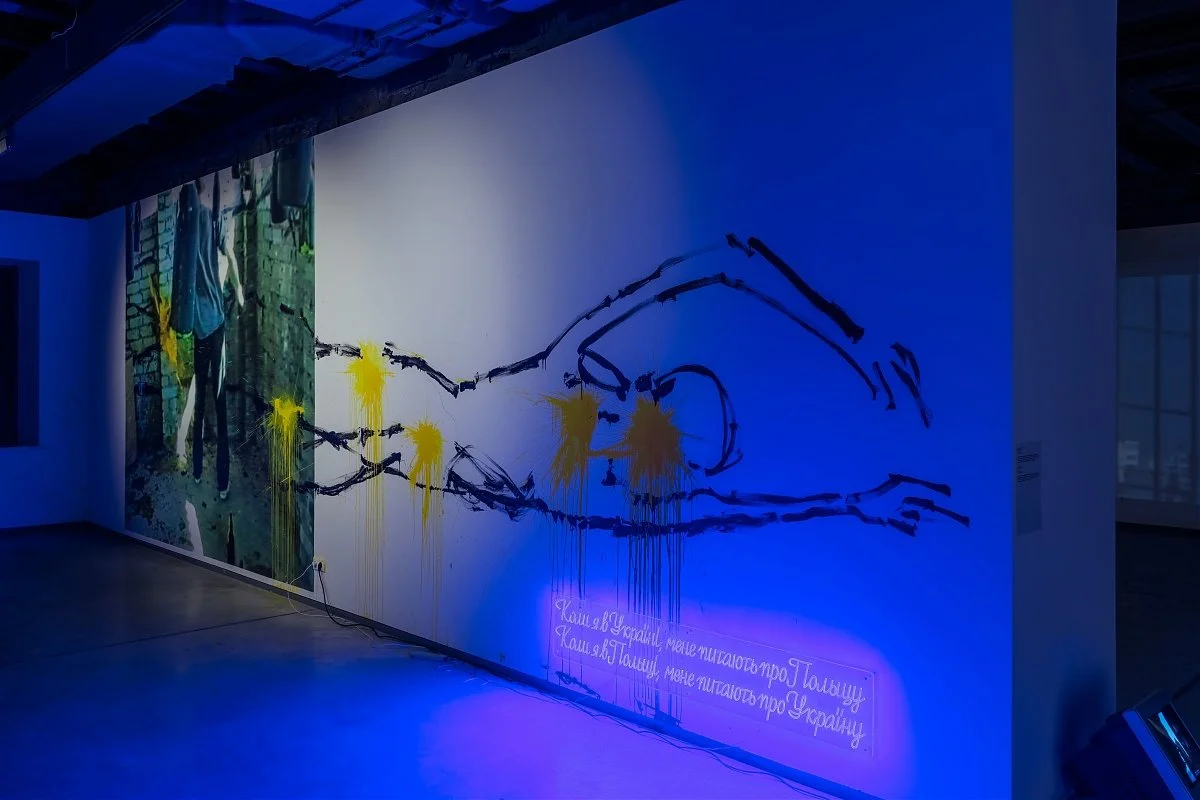
“6–7” is an exhibition whose title playfully alludes to a popular meme expressing ambivalence and indifference. Through the language of assemblage, it offers a critical reflection on the history of Ukrainian contemporary art, exposing acts of censorship, political interference, and capitalist attempts to shape artistic production, while bringing into focus artistic practices that have resisted populism and conservative movements.
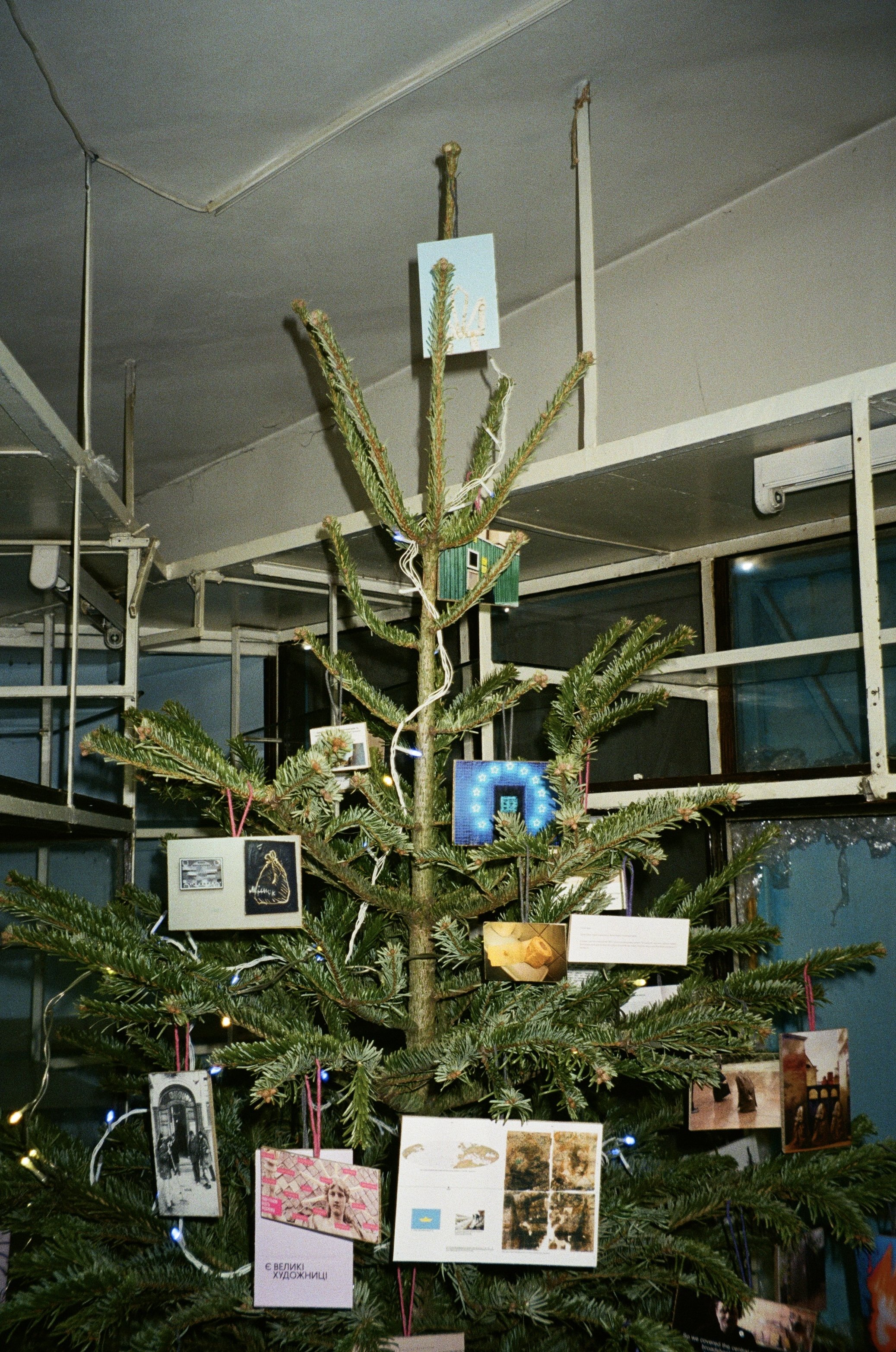
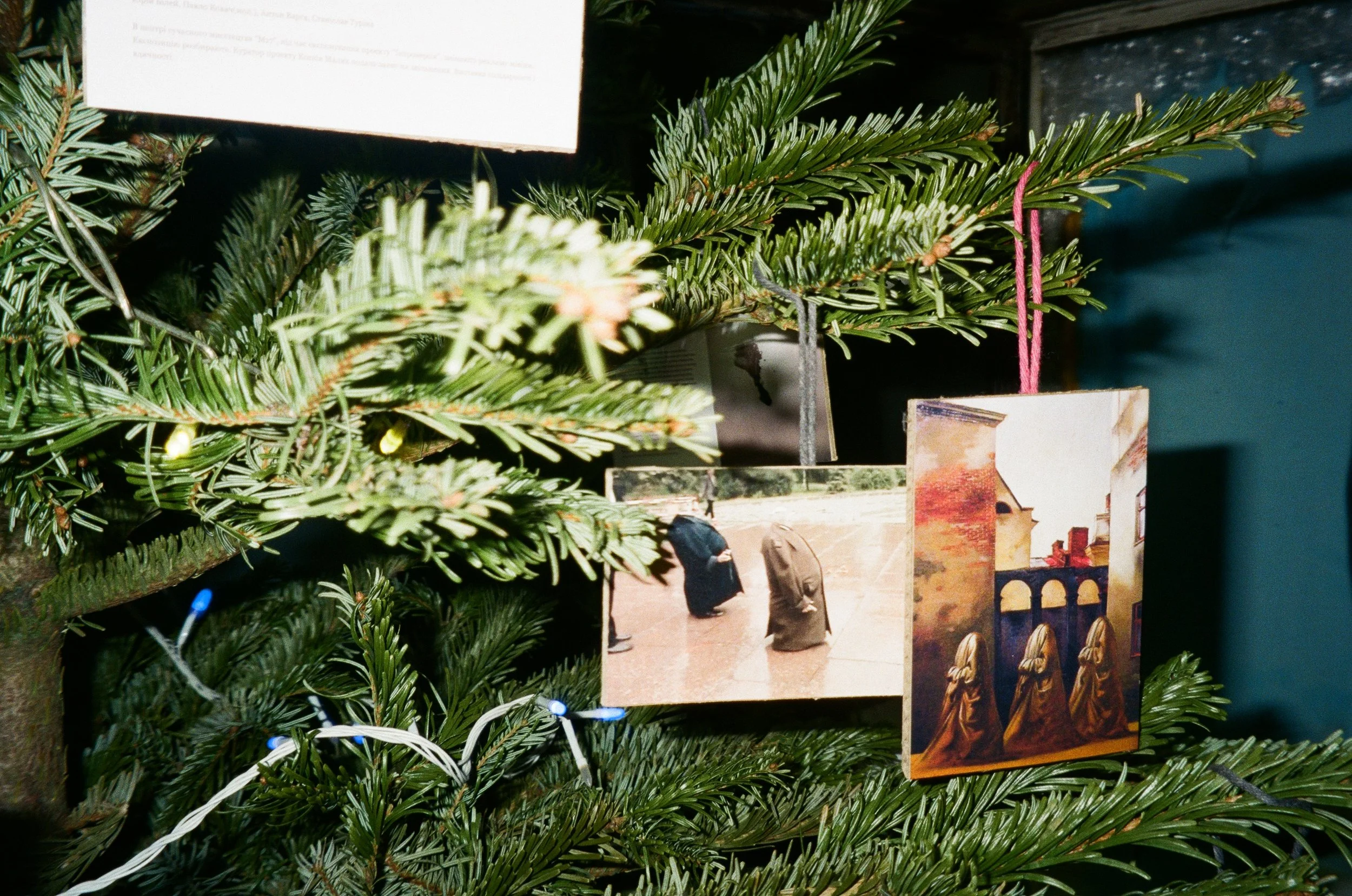
The exhibition unfolds as a multilayered environment centred around two symbolic elements: a Christmas tree and a television set. The Christmas tree occupies a particularly significant place in the history of independent Ukraine. It became one of the defining visual symbols of the Euromaidan protests of 2013–2014 and the eventual collapse of Viktor Yanukovych's regime. Recontextualised within the exhibition, it serves not only as a historical reference but also as a reminder of the entanglement of political struggle, public space, and visual culture.
Immersion In Blu(r)e
venue: TBA Gallery, Warsaw, Poland
April 5, 2025 — March 10, 2025
curator: Kateryna Iakovlenko
artist: Dasha Chechushkova
Wherever you go, the horizon stretches before you—the same thin line splitting the sky from the sea—blue against blue, though the sea is called Black. Black as an all-consuming void, one that cannot be reached, yet one from which there is no escape.
Wherever you go, even if you do not take a single step—the sea is everywhere. It lingers in the taste of salt and sand left on your lips, tangled in your hair; it seeps into your skin like a memory—one that is both warming and wounding at once. For the greatest fear is that this feeling may one day vanish forever. Like a trace of water under the burning sun.
Dasha Chechushkova’s exhibition, Immersion in blu(r)e, plunges into the depths of loss, sorrow, melancholy, beauty, nostalgia, despair, emptiness—an overwhelming ache that hollows and dehydrates— two tragedies, human and ecological, unfolding simultaneously.
Artist invites the viewer to gaze upon the horizon—a metaphorical embodiment of the Black Sea of Odesa—through a textile sculpture sewn from fragments, patchworks of other people’s lives and memories, torn away and reshaped by war. She offers a daring gesture: to become like this war, called "inhuman", by taking what once belonged to others. To alienate, to alter the landscape, to claim another’s memory, to carry it away. There is no metaphor here. Saltwater only deepens thirst—it does not quench it. Take it, cut, tear apart, divide stolen memories, plunder resources, lay claim to the land beneath your feet.
History is boundless.
A small tragedy gives birth to a greater one, meddling the human stories, ruining people’s ordinary lives and affecting still life; it blurring away what seemed to be the last remnants of emotion. Like it never happened. However, soon feelings return, stronger than ever. Like waves—one after another—displacing thoughts, emptying the soul, amplifying the silent screams of another’s pain to the brink of madness. And so, again and again, the cycle repeats, weaving together “eternal recurrence” and “piercing beauty”—where pain is born from simplicity and weightlessness, coexisting with horror and death.
How deep is loss? And what if it never stops?
As the artist herself writes, “Endless repetition will not help those who long to be heard.” Yet, despite everything, she repeats, and repeats, and repeats. Each time anew, through every image, every state captured in the twenty etchings of her series A Guide Before Confession.
Artist looks upon the horizon and moves toward her sea. Perhaps to confess, perhaps to say goodbye, perhaps to wander the shoreline without thought.
And then, just as she reaches it, there is nothing. Only the afterimage of water. There is emptiness—not black, but a pale gray, perhaps drained by sleeplessness, exhaustion, fear, cold, and shock—just as human skin pales under strain. But this is not human skin. It belongs to Earth. Sickly, brittle, weighed down by its past.
Now it is the sea that watches, gazing upon the frozen human figure, waiting for what comes next.
A salt-laced sand burns against a cheek, it comes with the wind from the South—a place where they were once happy.
Not a tear.
– Kateryna Iakovlenko
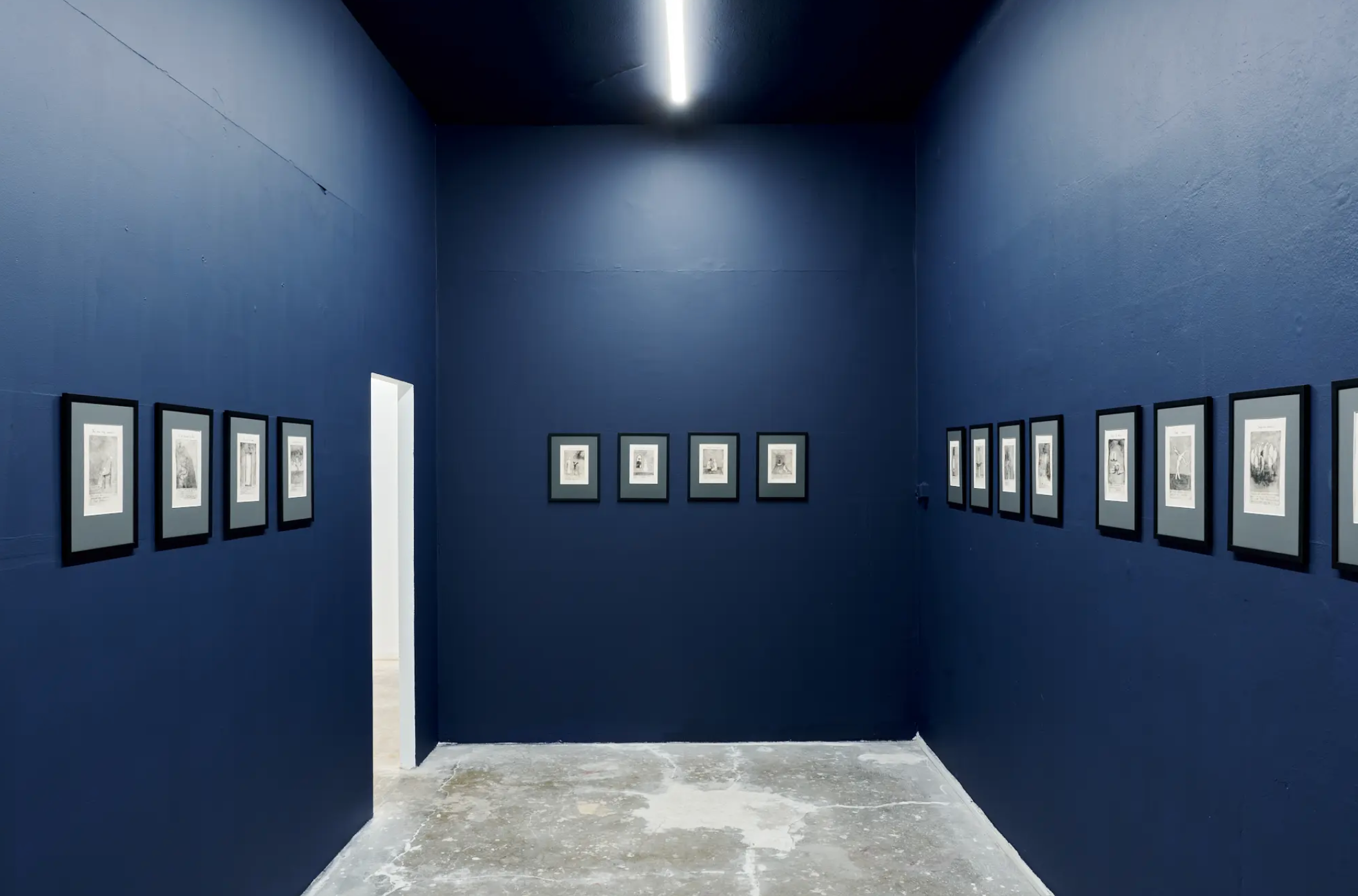
A Few Kilos Of Exhibitions
venue: thesteinstudio, Kyiv, Ukraine
November 29, 2024 — December 15, 2024
curator: Kateryna Iakovlenko
artist: Stanislav Turina
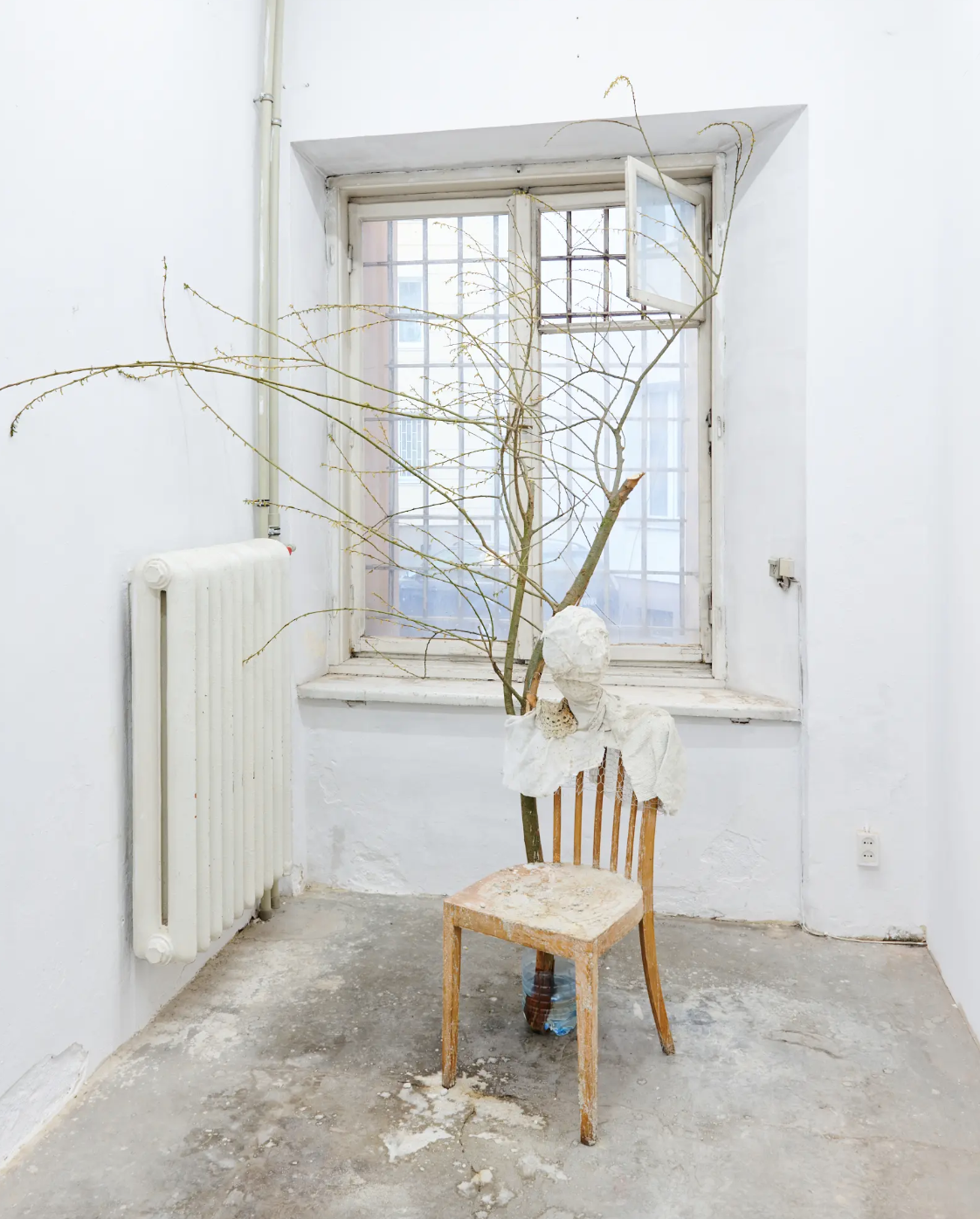
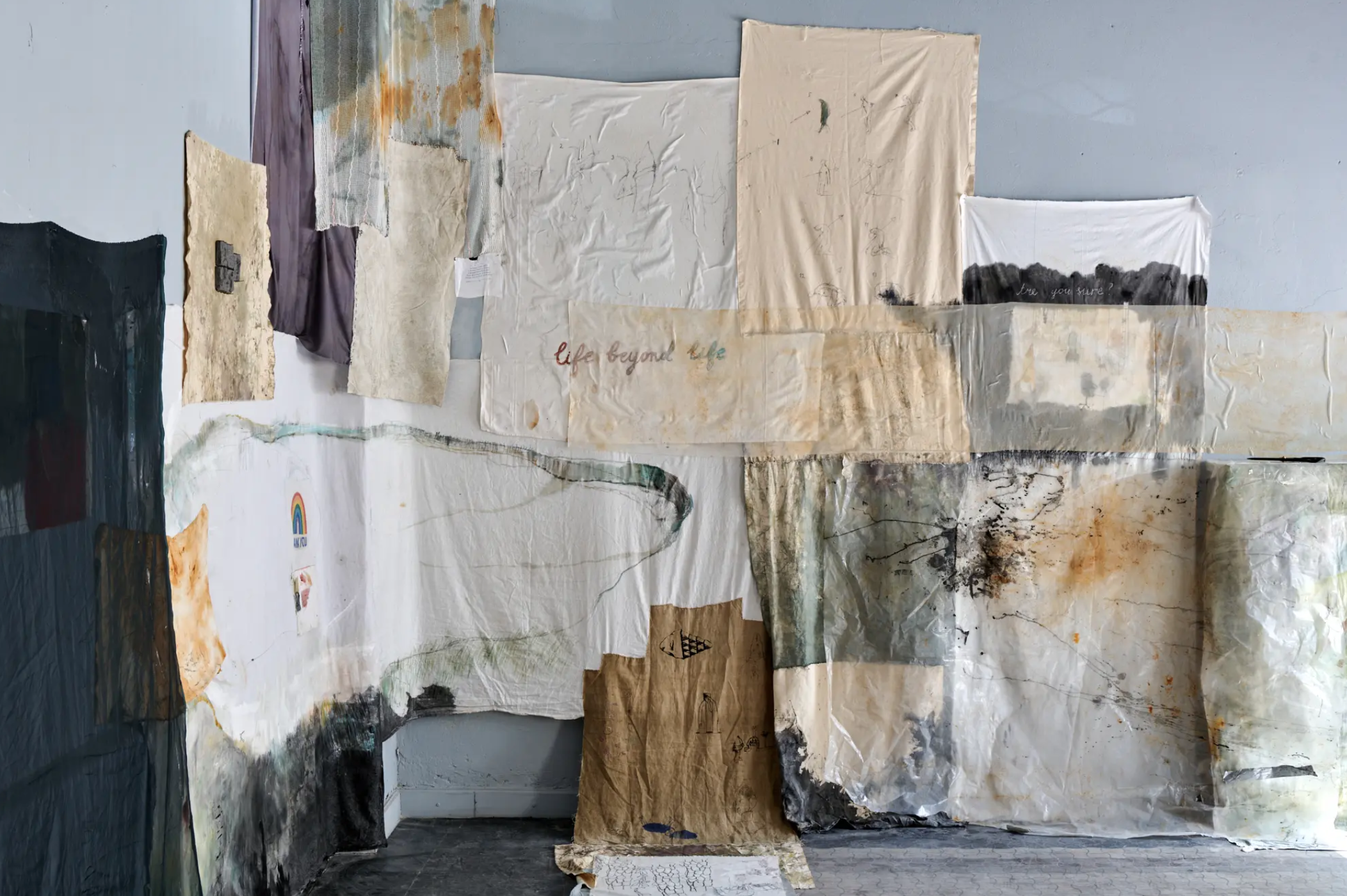
Stanislav Turina’s exhibition unfolds as a fluid, ever-changing display. The works presented engage with questions of memory and the value of art—both in times of war and within societies situated at the peripheries of dominant cultural and political narratives. Ultimately, this exhibition is about the periphery itself: the periphery of attention, objects, knowledge, experience, and people. Each work and series is at once connected to, and independent from, the others, forming an exhibition that resists a single linear narrative.
Stanislav Turina is an artist, songwriter, volunteer, and researcher of inclusion. His practice explores disability, the history of psychiatry, mountains, world cuisines, relationships between languages, rehabilitation, and human rights. Working across diverse media and fields of inquiry, he brings together seemingly disparate subjects to reflect on care, marginality, and the ways knowledge is produced and shared.
Our Years, Our Words, Our Losses, Our Searches, Our Us
venue: Jam Factory Art Centre, Lviv, Ukraine
November 18, 2023 — March 10, 2024
curators: Kateryna Iakovlenko, Borys Filonenko and Natalia Matsenko
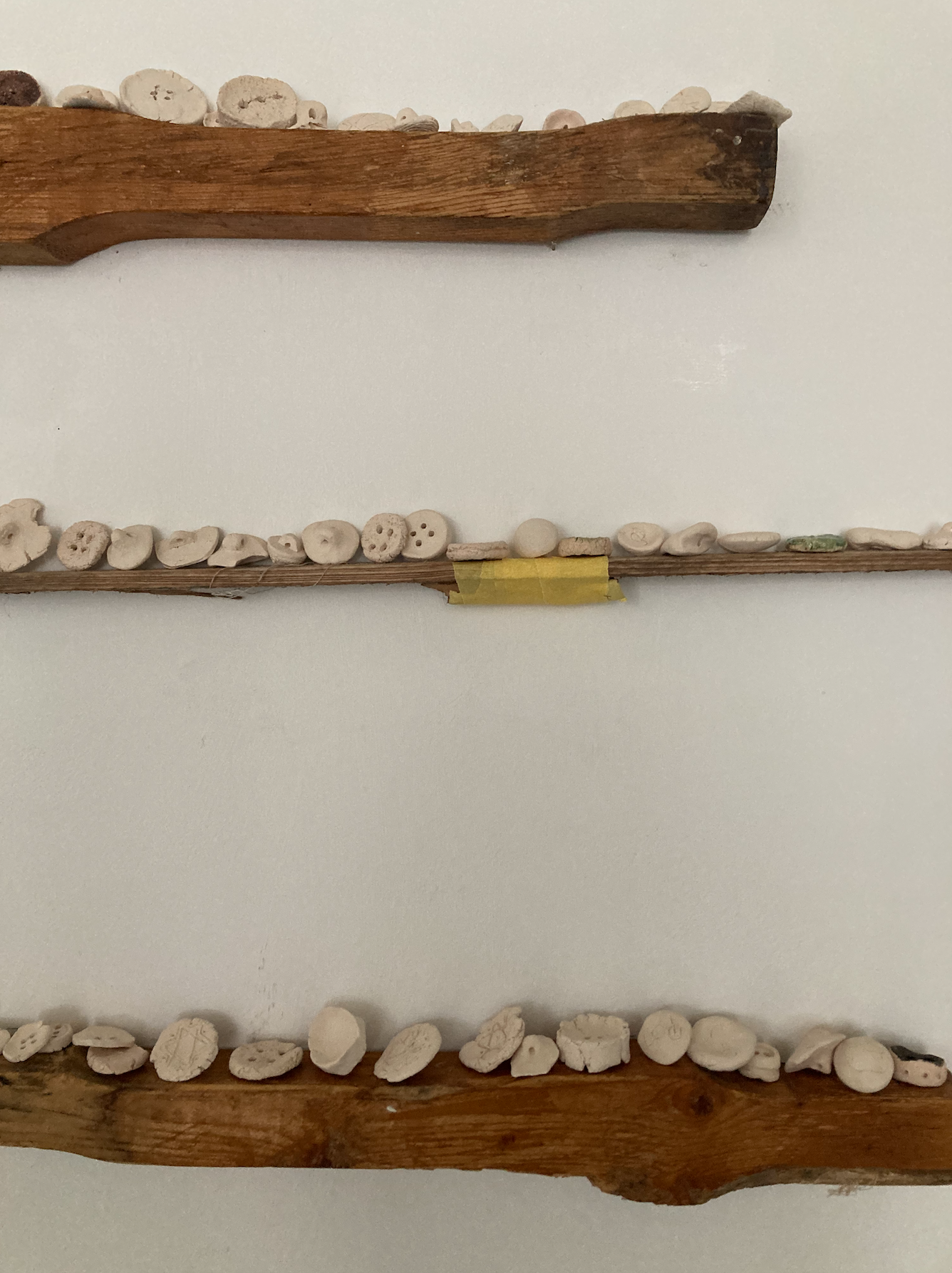
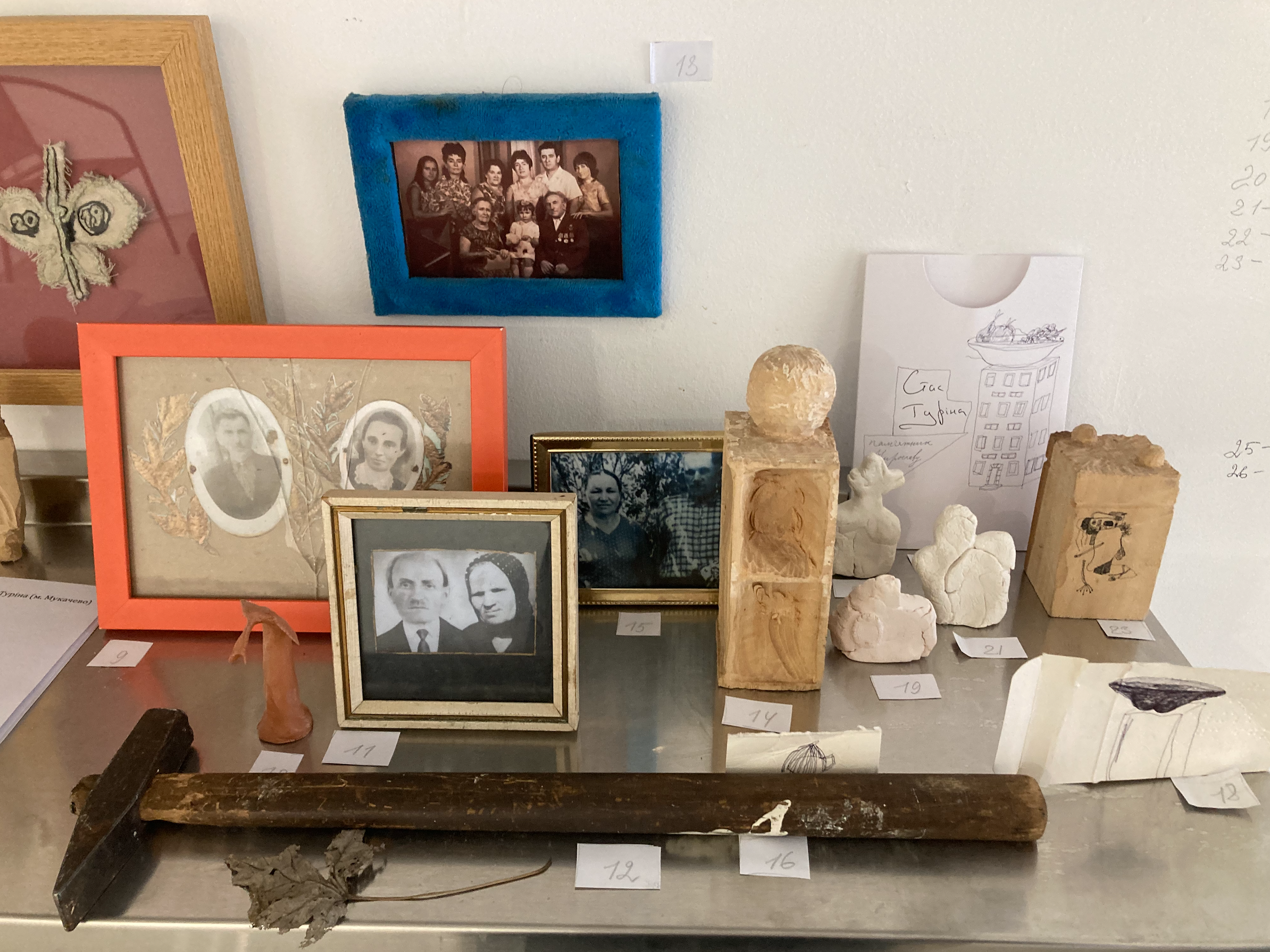
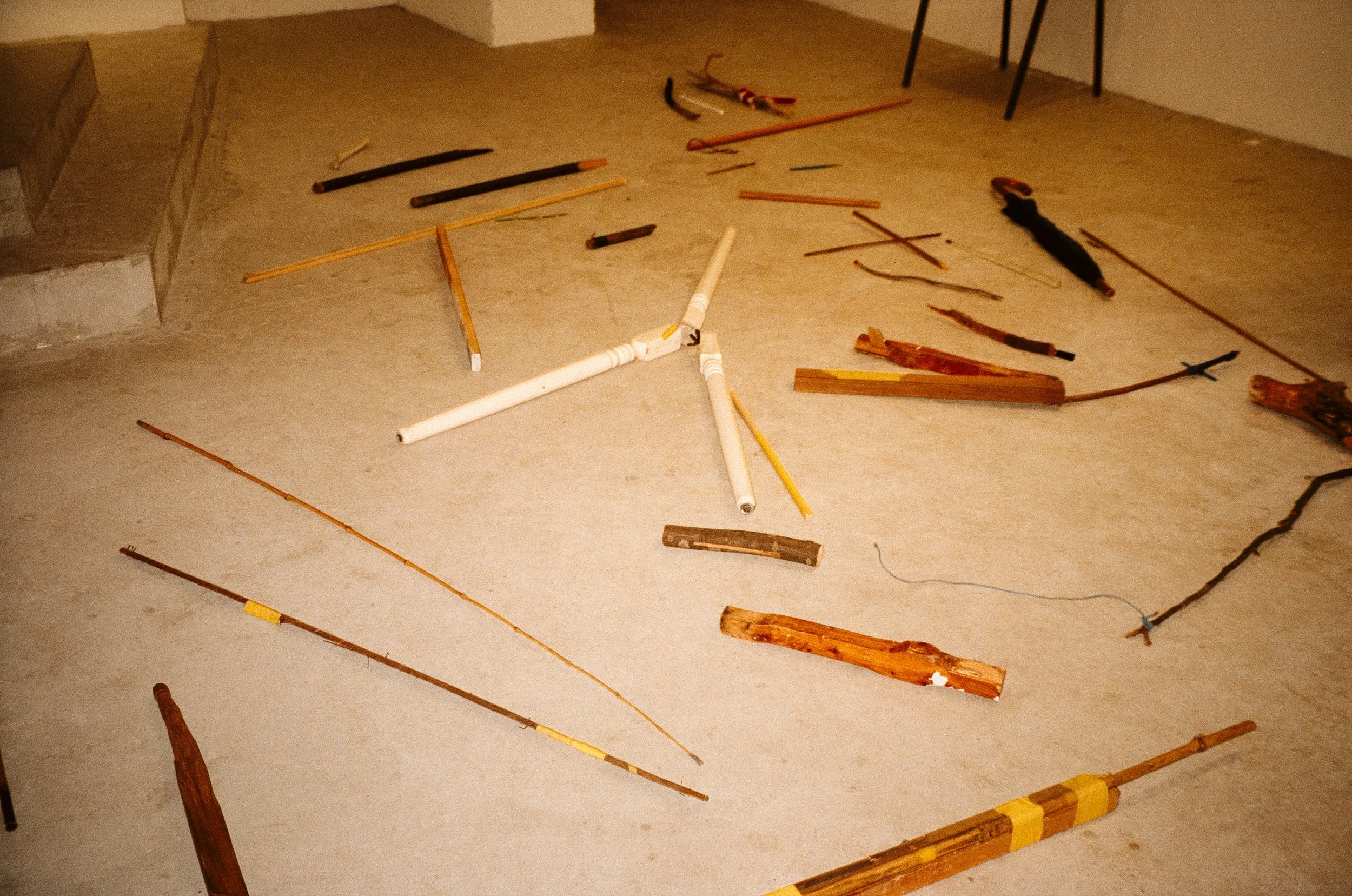
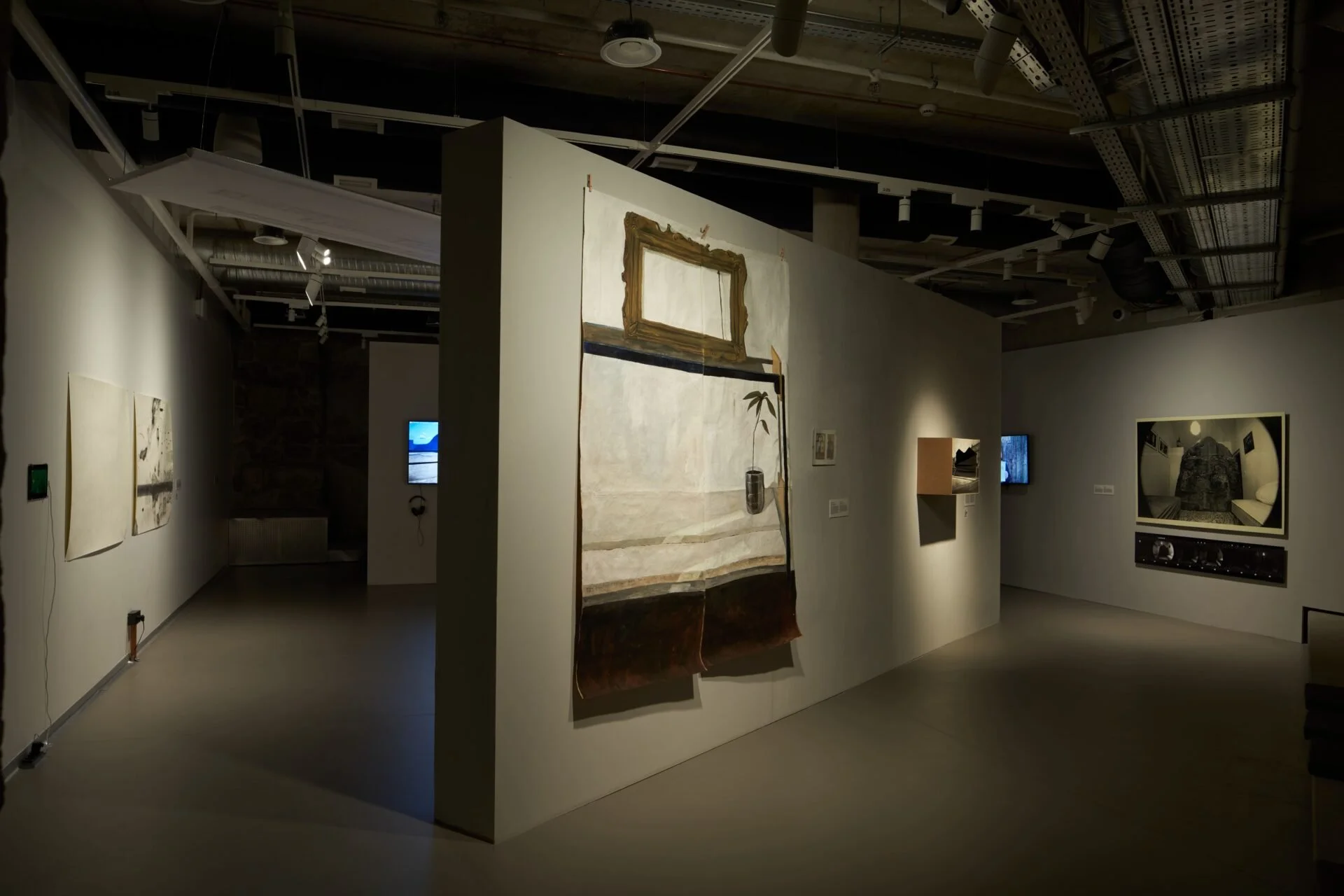
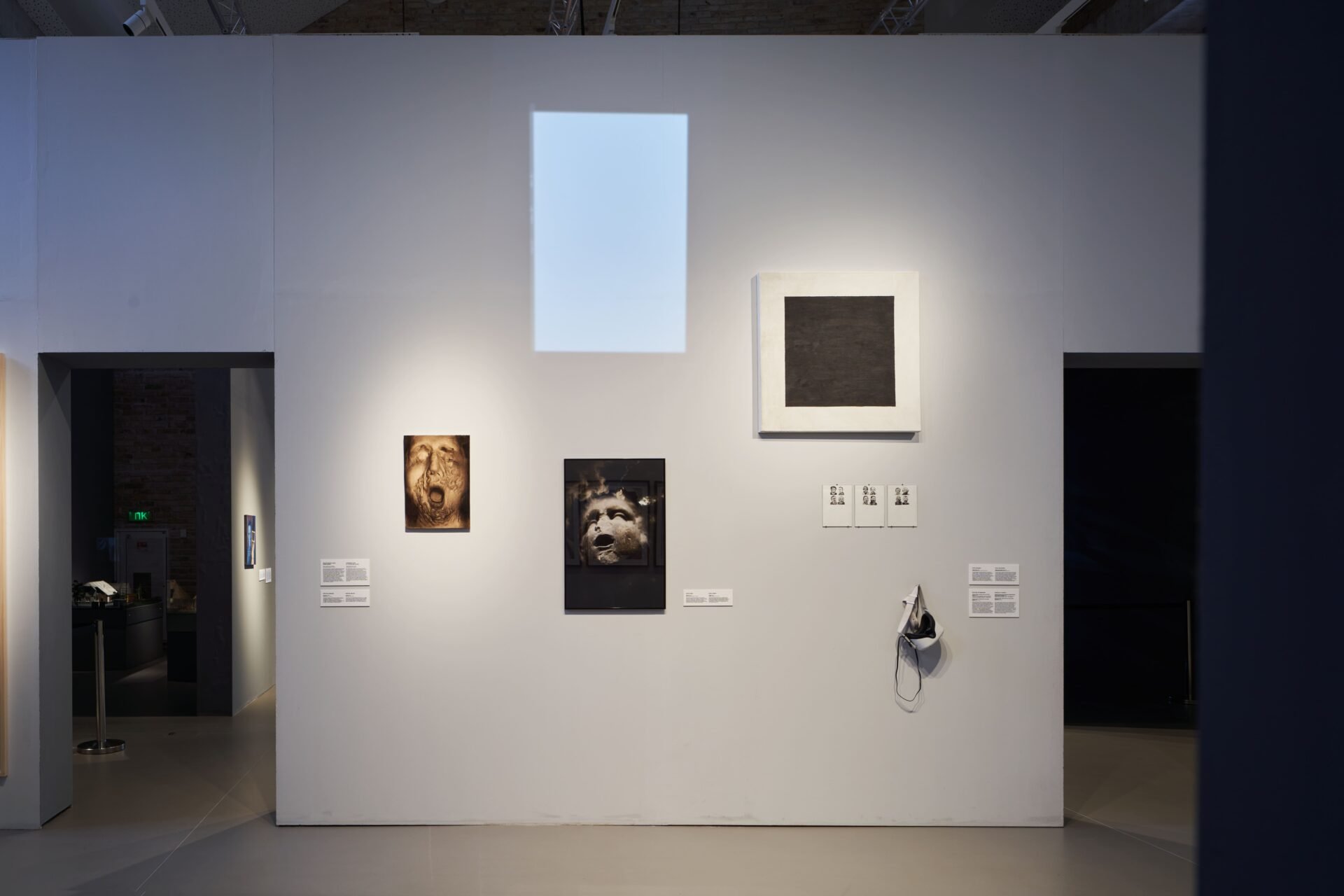
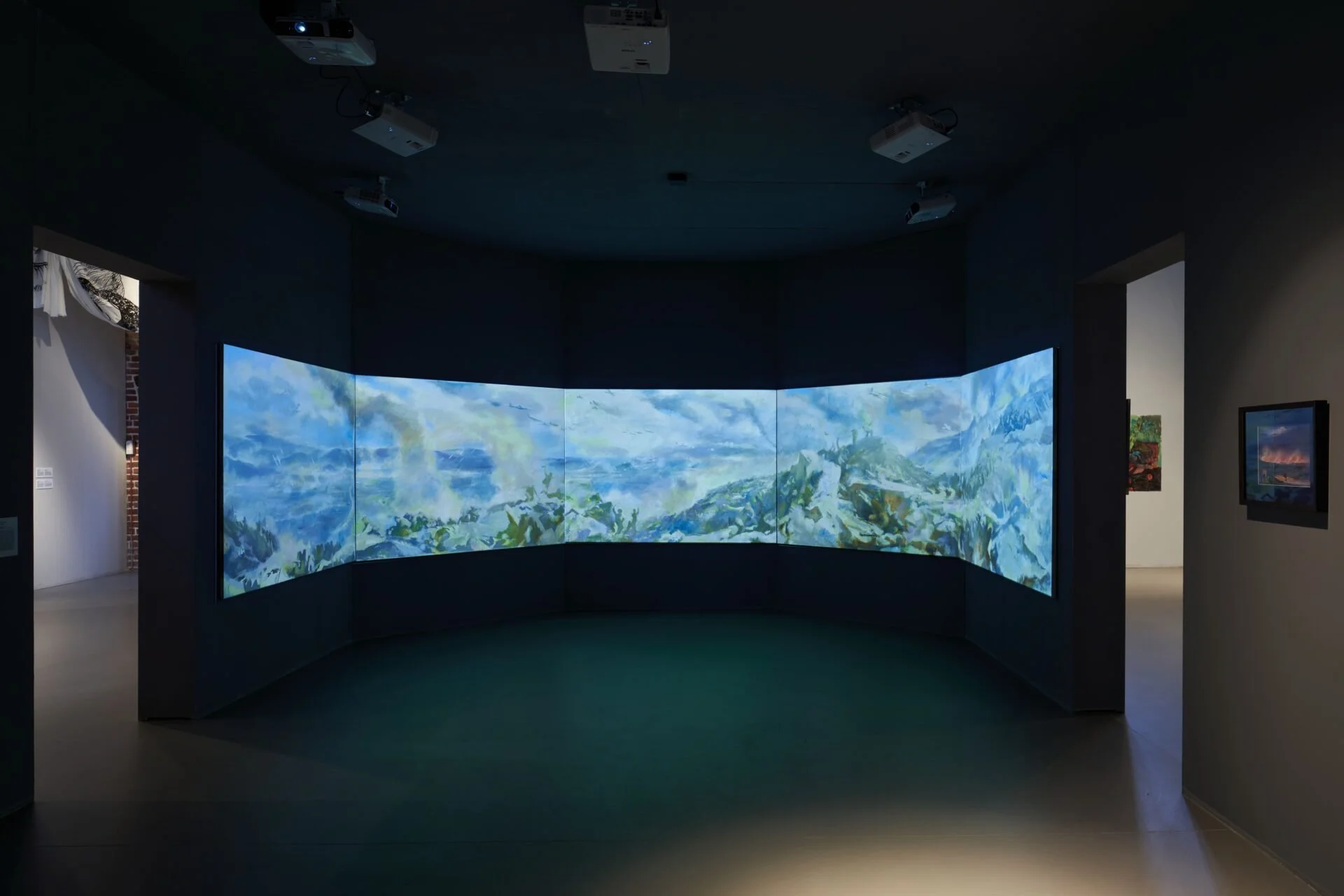
The exhibition featured works by over 70 Ukrainian artists, blending contemporary pieces with chronological perspectives dating back to the 19th century: Kateryna Alііnyk, Yehor Antsyhin, Yuriy Biley, Yuriy Bolsa, Katya Buchatska, Open Group, Vlad(a) Valizhevskyi, Stas Voliazlovskyi, Stas Voliazlovskyi and Ilіa Isupov, Oleksandr Hnylytskyi and Oleg Holosiy, Yevhen Hulevych, Yulіa Danylevska, Lia Dostlieva and Andriі Dostliev, Timur Dzhafarov (John Object), Anna Yeresko and Olena Zashko, Yuri Yefanov, Oleksandr Zhukovskyi, Dmytro Zaiets and Tetіana Pukhnavtseva, Bohdana Zaiats, Anna Zvyagintseva, Lucy Ivanova, Nikita Kadan, Zhanna Kadyrova, Alevtina Kakhidze, Alevtina Kakhidze and Pіotr Armianovski, Olіa Kowal, Svіatoslav Koverzniev, Mykola Kolomiiets, Vlodko Kostyrko, Vitalіy Kokhan, Yuri Leiderman, Pavlo Makov, Sasha Maslov, Mykola Matsenko, Kristina Melnyk, Sevilya Nariman-qizi, Natsprom (Oleg Tistol, Mykola Matsenko), Daniil Nemyrovskyi, Yevgen Nikiforov, Sergіy Petlyuk, Yuriy Pikul, Polina Polikarpova, Vіacheslav Polіakov, Sofiya Pomogaibo, Georgiy Potopalskyi (Ujif_notfound), Prykarpattian Theater, Vlada Ralko, Andriy Rachynskyi, Daniil Revkovskyi and Andriy Rachynskyi, Andrii Sahaidakovskyi, Anton Saenko, Anton Saenko and Yaroslav Futymskyi, Vasyl Sai, Oleksiy Sai, Yevhen Samborskyi, Tiberiy Silvashi, Karina Synytsia, Dan Sotnyk, Elena Subach, Oleksandr Surovtsov, Liubomyr Tymkiv, Vasyl Tkachenko, Yaroslav Futymskyi, Roman Khimei, Dasha Chechushkova, Taras Shevchenko, understurctures.
This exhibition began to take shape as we grappled with language. When the three of us first broached the theme of “art during wartime,” its contours were expectedly hazy and the words that seemed appropriate eluded us. Over the past year and a half, we have often had to stop in the middle of our conversations to define the part of the war that began on the night of February 24, 2022, or, conversely, interrupt our confident speech in order to extend the chronology of the invasion to at least 2014. Ukraine’s struggle for self-expression, independence, and ultimately existence unfolds further back in time: five in the morning became a temporal rupture that first drew in Crimea, then Donetsk and Luhansk, and now the entire country into the long twentieth century – with its unfinished wars, local and international politics, landscapes, languages, weapons, museums, emancipatory movements. By looking beyond the twentieth century, we can see the burning fields in Taras Shevchenko’s works, which continue to smolder before our eyes. This is how we also notice our own perspective, which now views the art of the past differently.
The exhibition “Our Years, Our Words, Our Losses, Our Searches, Our Us” is based on the convergence of two perspectives: one that reaches back to the artworks created before the 2022 invasion, while the other that engages with contemporary viewpoints. Looking at each other and into the past, we question change and doubt, the reasons to conclude or suspend artistic practices, and the ability to initiate them. Can doubt become a method? In these two temporal streams, historical and personal, in the disordered and radical times, we have arrived at the point where we do not provide definitive definitions, but create paths to follow artists in their transformations and connections with each other. We have constructed the exhibition in such a way as to tell almost the same story multiple times – at the intersection of two scopes, grounding ourselves where the distance between history and personal experience is shortened.
In this war, it becomes clear that the proclamation of the twentieth century as a short one (1914-1989/1991) was premature. History does not end but continues. The era that remained in the past for some time, which could only be excavated, is now scaled into a “very long twentieth century” (? – to the present), compared to the duration of the rather long nineteenth century (1789–1914). In this expanded horizon of events, the empty spaces of history receive explanations not only through research studies, but primarily through the lived experiences of participants and eyewitnesses. In the changes accompanying these experiences, distances also shorten. In the formation and maintenance of connections, in building temporary artistic and non-artistic communities, within or beyond Ukraine, artists find a new present. Has the long chronology of the war become this new present? What was once an empty space is now being filled with an understanding of other experiences that resonate with our own. A continuous battlefield view of history unfolds between the Crimean War, its Soviet commemoration, the fall of the Iron Curtain, and the current war, where Crimea has become one of the cornerstones. Forgotten potatoes and the monument to Kherson potatoes lead to famine and harvest in the artworks of the twentieth century. Portraits of friends at an art residency meet painted-over faces from a 1930s photo album. Portraits taken by a half-frame camera blend with friendly caricatures from the gallery of portraits of participants of the Second Congress of the Ukrainian Union of Proletarian Writers. An empty space for the icon of the Vyshhorod Mother of God is replaced by black paint made from scratch from soil, forming a Suprematist icon. Gaps in understanding and archiving of the past are accompanied by the current emptiness of evacuated museums. Dioramas, landscapes, 360° panoramic VR videos, video archives of the heavens, inaccessible territories of personal geography. Diaries, anthologies and periodicals. A memorial of 2021 meets a memorial of 2023.
The empty spaces in the long chronology of the war not only indicate gaps and mark absence, but also become counterforms, revealing newly noticed significance. Conscious emptiness is no longer the emptiness of forgetting. For us, emptiness is a reason for reflection, a space for exploration and movement, a perspective from the past to the future and vice versa. These voids do not appear by themselves: stolen, lost, banned, unpublished, destroyed, evacuated works of art; shot-at murals of Boychuk followers, the concrete-filled “Wall of Memory” by Volodymyr Melnychenko and Ada Rybachuk, mosaics of the Sixtiers shattered by hammers and missiles, and so on. Gaps and losses tend to be filled. They are bridged and intertwined by living ties that form rapidly and non-linearly, in contrast to the monolithic narratives into which time and ideology seek to compress history.
In defining the curatorial gesture, we quickly abandoned the idea of creating a summarizing exhibition. First, the processes we are in the middle of are still ongoing, and second, the formulation of a generalized statement always arouses suspicion, primarily because of the oversimplification. This exhibition is structured like a series of essays – short and long. Each segment of the journey tells stories that can intersect and together form more complex essays. You can navigate this exhibition in various ways: starting from any essay, sequentially or chaotically, from the five rooms on the underground floor to the large space on the ground floor, or vice versa. With this variability, we aimed to capture the multiplicity of perspectives and experiences of this war, because despite certain collective experiences, each person lives it in their own way. There is no single answer to the numerous questions, no single route to follow. As always in history, which unfolds here and now, there is a personal choice and the ability to decide which direction to take. In the multiple paths of the upper hall, alongside the historical narrative, echoes of the essays from the lower halls emerge – about places and care, about loss and memory, about the language of love and the language of weapons. In the exhibition space, through a combination of the collective and the personal, we would like to talk about how our social structures are changing, how the sense of closeness, empathy, and love is transforming; what the relationships between people are like during the war, not only among community members, but also among the closest people, relationships among artists, between artists and curators, art and the viewer, art responding to specific tragic events and its presence over many years. The principle of essays, borrowed from the likes of Hrytsko Chubai, Kira Muratova, and Jim Jarmusch, allowed us to build trajectories along the paths that the artists themselves follow, doubting and showing solidarity in their actions and reflections.
The journey to follow the artists is evident in the exhibition’s title, extending the sequence started by the Prykarpatskyi Theater collective in their workshop “Our Apartments, Houses, Cottages, Garages, Offices, and Backyards” (2022). The recurrent “ours” isn’t a statement of ownership, but an invitation to perceive it not merely as appropriation, but as a newly discovered commonality. This commonality is the tangible condensation of life in the long war, which makes the exhibition primarily a meeting place, a space for sharing experiences and thoughts. Time and time again, practices of the communal are repeated and developed in artistic and non-artistic gestures: grassroots volunteer initiatives, postcards for donations, chronicles of self-organized reconstruction, images of interaction and encounters, images of forced displacement and separation, landscapes of tragedy that are quickly recovering or still beyond recovery. Commonality and community become tropes of the struggle for simple coexistence – when bodies are in the same place, thus forming an extraordinary gesture and resistance.
We do not enter the exhibition halls to tell the story from the very beginning. We are not concluding what we bring together in our temporary curatorial association. In fact, our narrative continues, commencing from our inaugural exhibitions, crafted by each of us individually at different times and in different contexts; it encompasses the experiences of fellow authors who also created or participated in exhibitions over the past year and a half. We construct paths and will gather together for several months to discuss the personal and communal, memory and history, hoping that the narrative will not be interrupted again.
– Kateryna Iakovlenko, Natalia Matsenko, Borys Filonenko
Publication within the exhibition:
OUR YEARS, OUR WORDS, OUR LOSSES, OUR SEARCHES, OUR US. ist publishing, 2024
Наші роки, наші слова, наші втрати, наші пошуки, наші ми, ist publishing, 2024
Утривалення розмови [Lengthening the conversation], Edited by Oleksandra Kuschenko. ist publishing, 2024
Reviews and Media Coverage:
Charlotte Higgins. ‘I want to have amazing sex before the nuclear strike’: Ukrainians’ fears and desires go on show. The Guardian, February 12, 2024
Our years, Our words, Our losses, Our searches, Our us” – with Borys Filonenko and John Object, Kultblut Magazine, February 24, 2024
“The experience of war will always be a part of everything we do” — In conversation with Natalia Matsenko, Kultblut Magazine, March 4, 2024
What role does art play during war? – In conversation with Kateryna Iakovlenko, Kultblut Magazine, February 25, 2024
I Dreamed Of Beasts
venue: Galeria Labirynt, Lublin, Poland
November 25, 2022 — February 26, 2023
curators: Kateryna Iakovlenko and Halyna Hleba
artists: Katya Buchatska, Daryna Gladun and Lesyk Panasyuk, Evgeny Holubentsev, Dmytro “Orest” Kozatsky and Yulia Hontaruk, Anna Zvyagintseva, Inga Levi, Yana Kononova, Anastasia Pustovarova, cooperation of Pol, Tokha and Tsvyakh, participants of the “Artsvit for Children” program, Olya Fedorova, Bogdan Shumylovych and the cat Korzhyk
Organizer: Artsvit Gallery (Dnipro, Ukraine)
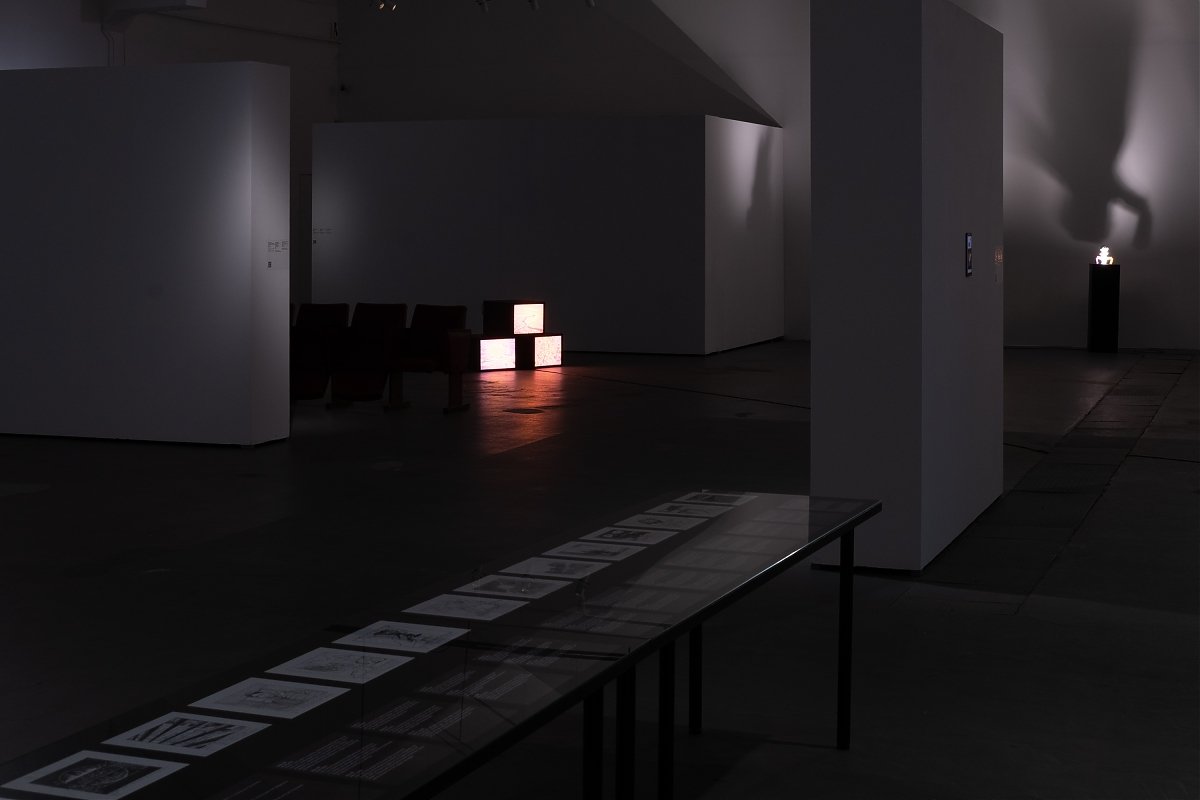
This exhibition emerged from reflections on a magical forest that once was a place of walks, calm, and reassurance, but has now become saturated with threats: mined ground, sites of murder, rape, and unprecedented collective tragedy. Our forest has turned dense, dark, and filled with fear. And yet, even in its deepest darkness, its inhabitants—extraordinary beings—help illuminate the path and resist the encroaching gloom. These magical creatures appear in dreams, live with us in our homes, hold our hands, protect those at the front line, and bury the dead.
The power of these beings lies in dignity. It disperses fear, helps overcome trauma, and allows one to pass through hardship as if through a mythical initiation. By invoking the notion of the fairy tale, we do not diminish real pain or tragedy. Despite the horror of war, it is precisely imagination and utopian thinking that allow us to envision the future, to hold on to it, and to address it not as abstraction but as something solid, like a concrete foundation.
We have long considered how to speak about an ongoing war in an ethically responsible way, and ultimately chose to immerse the viewer in a haze formed by dreams, memories, diaries, conversations, and lived experiences that have taken material form as testimonies of war. We aimed to make this exhibition documentary, while simultaneously unsettling the very notion of the “document.” We also sought to make it artistic, while problematising art itself. Above all, we became concerned with individual and collective experiences that have found their material articulation.
The exhibition was initially meant to include the voices of evil—conversations between Russian soldiers and their mothers and wives, in which they confess to committed crimes, as well as photographs of Russian soldiers in the forests of Izium taken shortly before their deaths. We believed it was important to recognise evil and to recall its “banality.” However, after witnessing yet another revelation of atrocities committed by the Russian army in liberated Izium in the Kharkiv region—where mass graves of brutally murdered and tortured Ukrainian soldiers and civilians from early spring 2022 were discovered—we decided to withdraw the perpetrators’ privilege of agency. The Russian army deprived people of freedom and life; therefore, we deprived Russian soldiers of the right to any speech, even confessional speech. We still wish to hear them, but not in a gallery space—rather, in the courtroom of an international tribunal.
Neither we nor this exhibition represent evil as an abstraction. It is present in every work, explicitly or between the lines, as it is now present in our lives. And yet, by the end of the exhibition, it takes form as an empire that has died. It has been destroyed by extraordinary beings—the same ones who appear in dreams, hold our hands, protect those at the front, and bury the dead. Among them are the authors whose voices are present in the gallery space.
– Kateryna Iakovlenko and Halyna Hleba
Everyone Is Afraid Of The Baker, But I Am Grateful
venue: apartment on Universytetska str, Irpin city, Kyiv Oblast, Ukraine
August 26, 2022
curators: Kateryna Iakovlenko artists: Katya Buchatska, Anna Zvyagintseva, Sasha Kurmaz, Roman Mykhailov, Anatol Stepanenko, Stanislav Turina, Tamara Turliun, Mark Chegodaiev
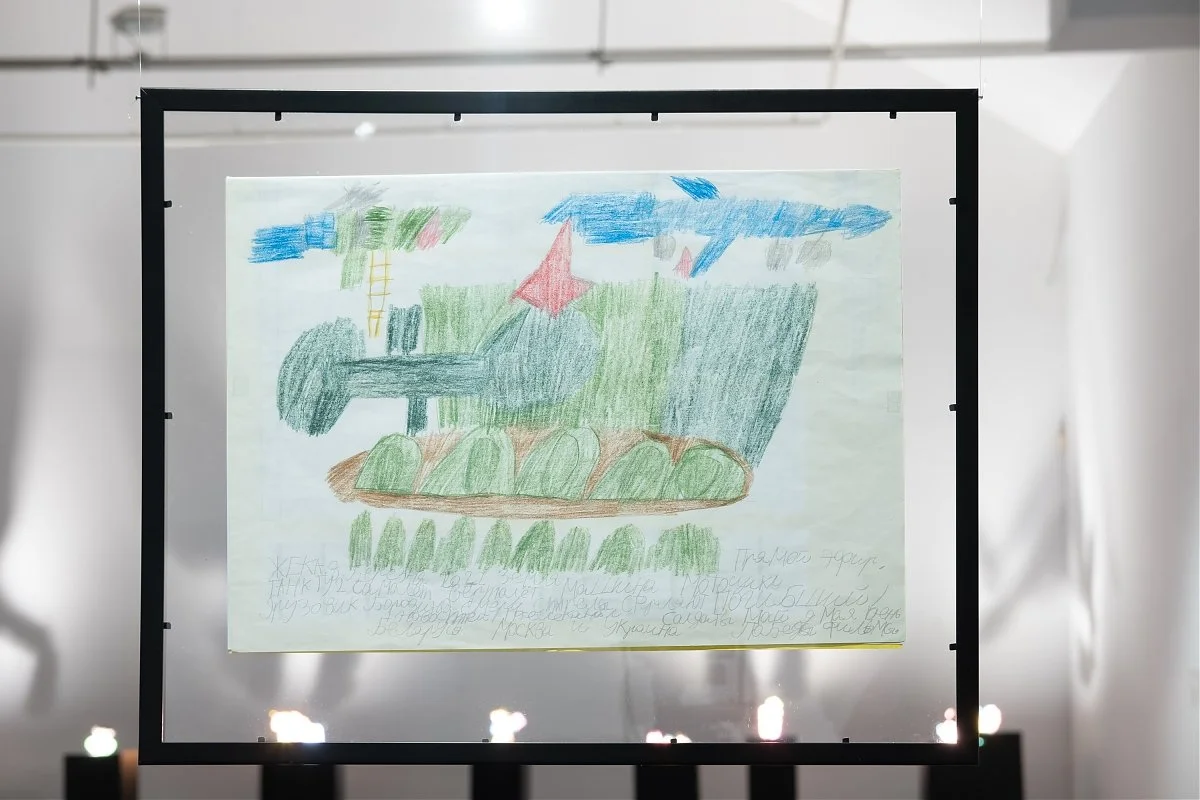
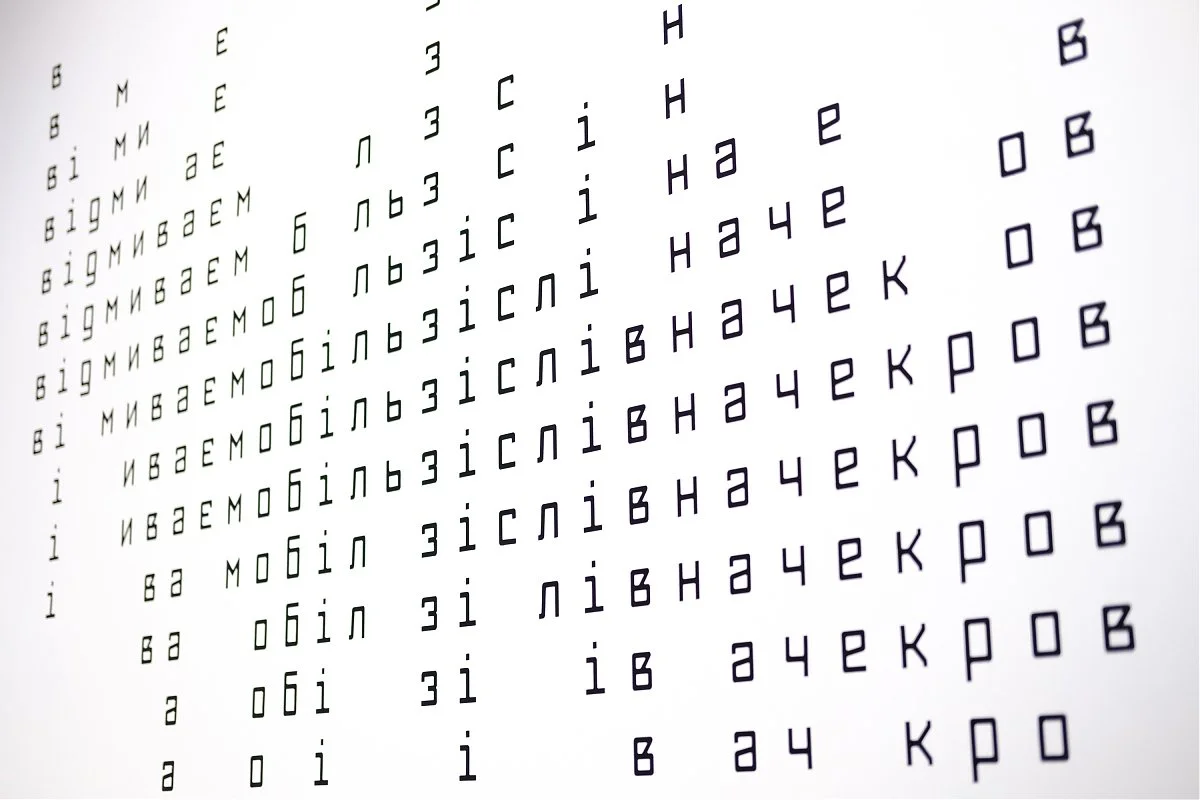
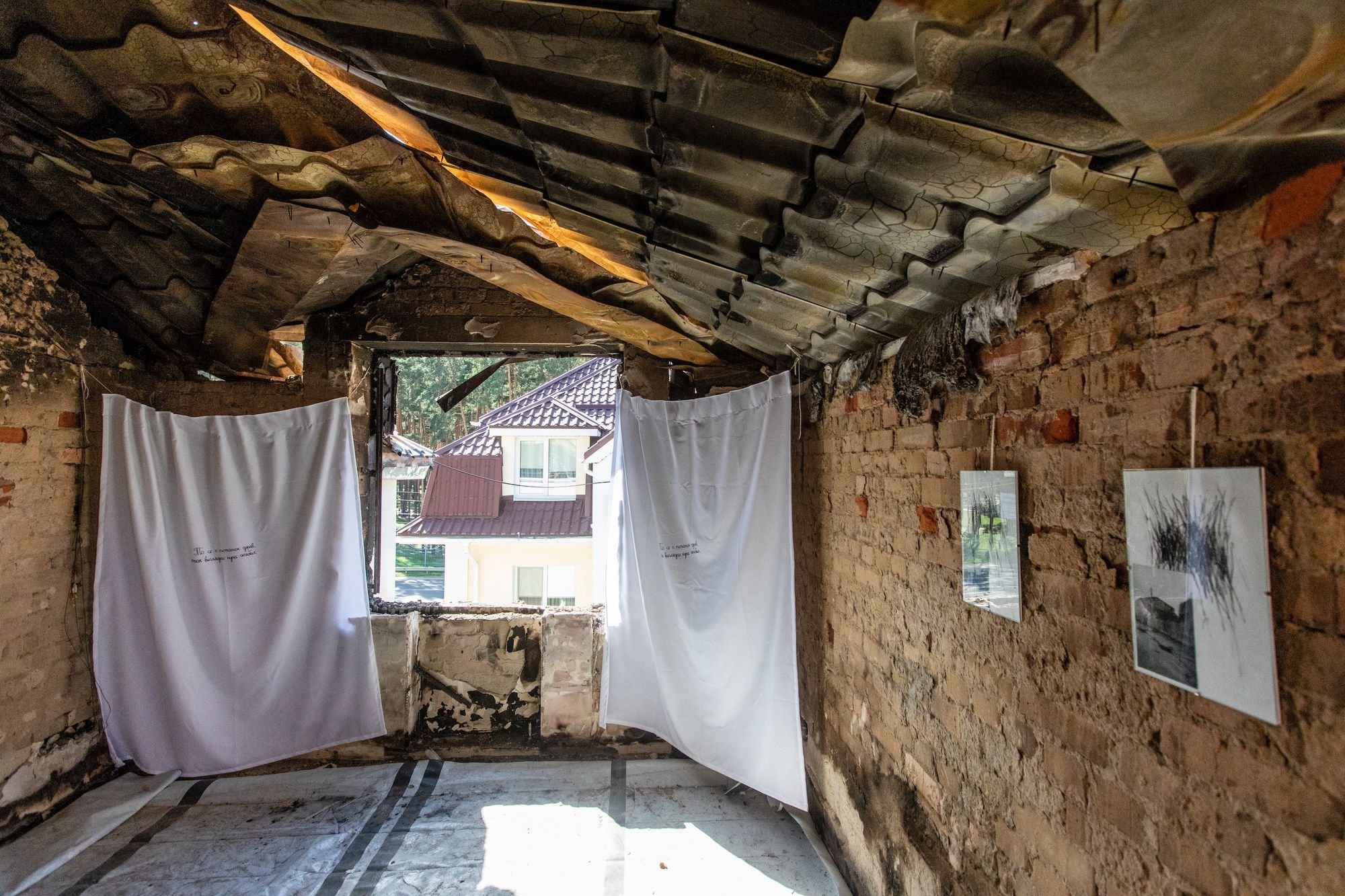
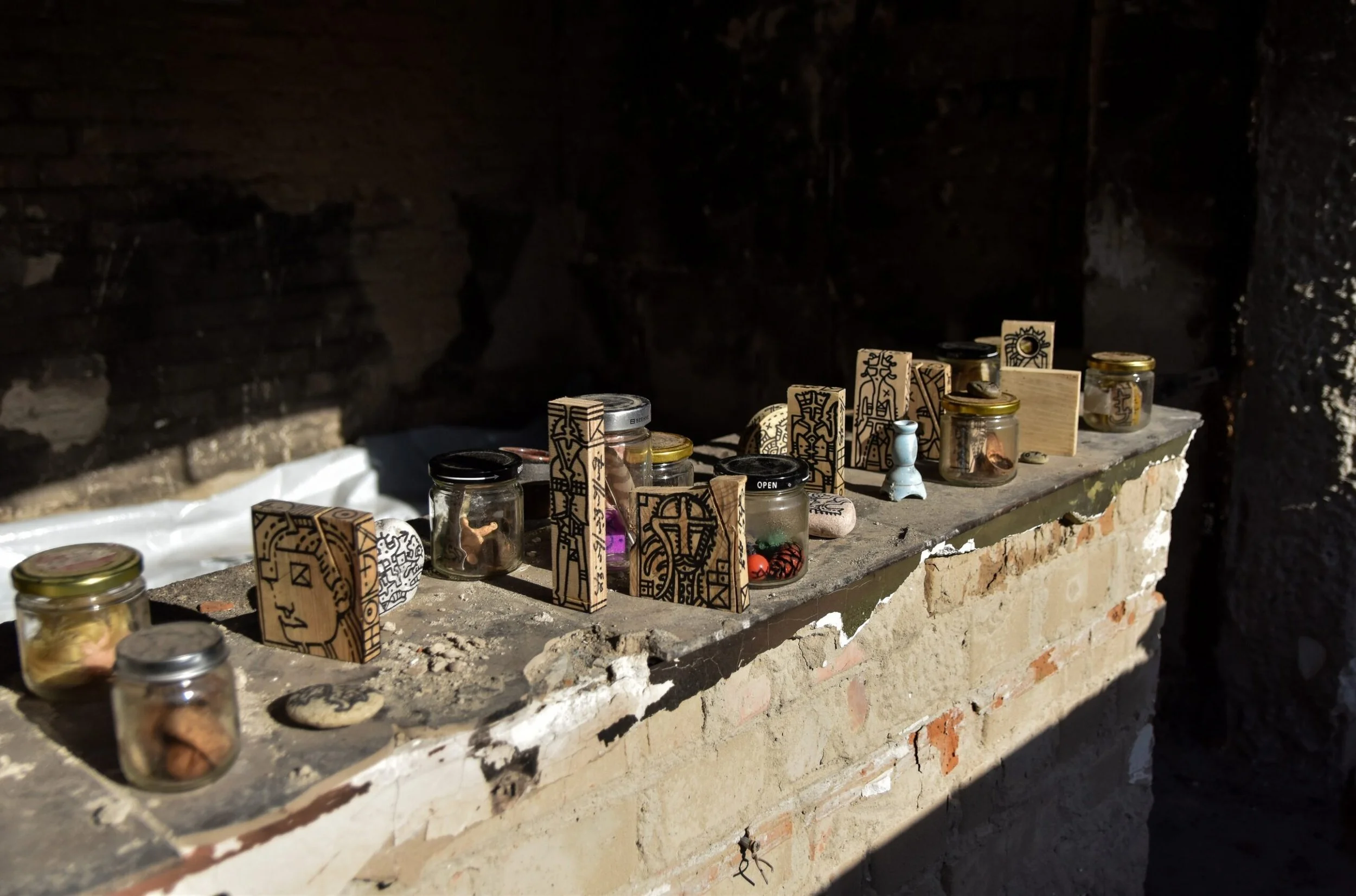
An exhibition in an apartment destroyed by the Russians through a direct air strike was created in August 2022. Its dramaturgy was built around the burnt tables and debris inside the ruined house. The exhibition spoke of loss and the habitation of grief, gaps in art history, epistemology, and the archive.
“Archives are critical. If the archives were not so essential, the Russian embassy in Ukraine would not have burned its archives the day before the war and its army would not have taken aim at museums and cultural institutions. I have worked a lot with the history of Ukrainian art, which is full of lacunae, unproven myths and oral stories; for me, these spots and irregularities are essential. I am interested in looking at those who were in the shadows and why. But today, the question of absence has arisen from a different angle: what does absence mean historically, is it a process of proper selection, and who made it? What fills this absence?”
— Kateryna Iakovlenko for e-flux art agenda, September 29, 2022.
Read more about the exhibition:
“Life after ruins”,e-flux art agenda, September 29, 2022
Kateryna Iakovlenko. "Vorsicht, gefährliche Bäume" in Aus dem Nebel des Krieges: Die Gegenwart der Ukraine(Katharina Raabe und Kateryna Mishchenko, eds. ). Edition Suhrkamp: Sonderdruck. Berlin: Suhrkamp Verlag, 2023, p 125-167
Lizaveta German. “Thickets, Groves, Apartments, and Garages: on informal exhibitions in Ukraine, 1960s—2022: Part II” in Most Magazine, October 30, 2024
Paulina Mamot. “Presence in Absence. Memory, Debris, and Radical Potential” in Contemporary Lynx, January 30, 2026
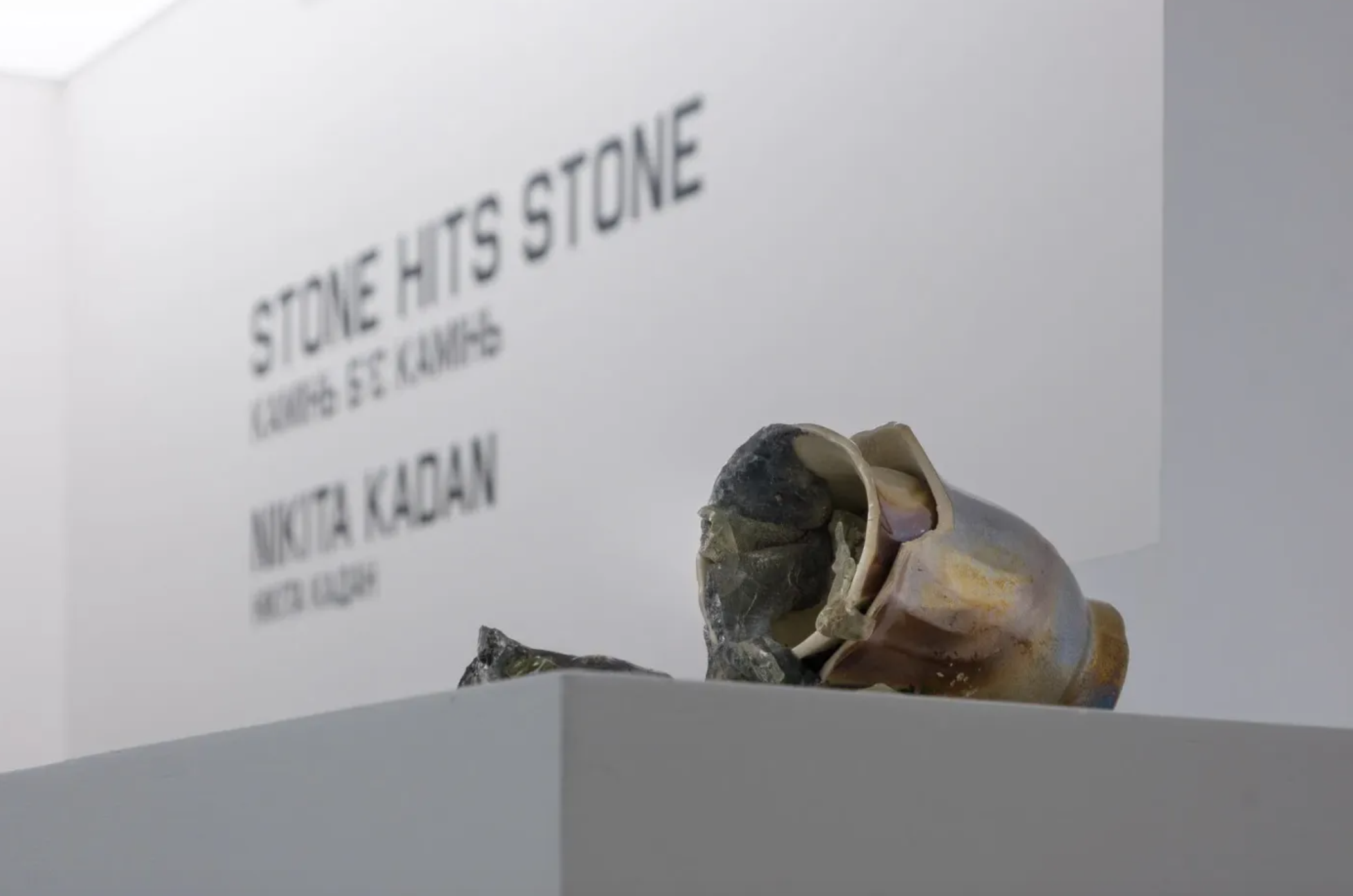
Stone Hits Stone
venue: PinchukArtCentre, Kyiv, Ukraine
February 27, 2021 — August 15, 2021
curator: Björn Geldhof, artistic director of the PinchukArtCentre assistant
curator: Kateryna Iakovlenko
artist: Nikita Kadan
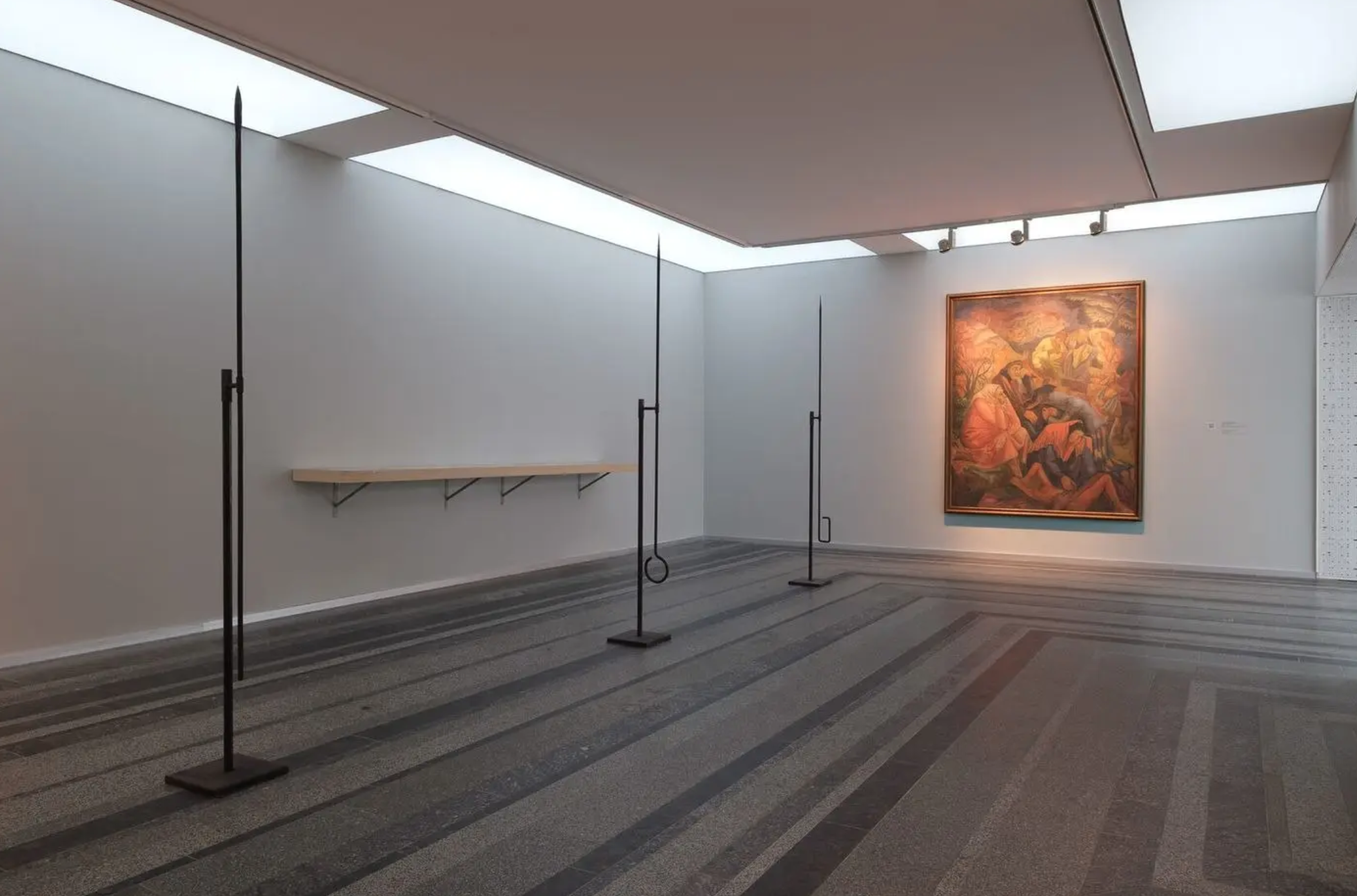
Nikita Kadan’s first major solo exhibition in Ukraine presents both new produced and existing works reflecting on Ukrainian history, political violence, national historical heritage, avant-garde and Soviet utopia. This exhibition deals with present day challenges in its inextricable connection with the past, using history to enlighten the present and imagine the future.
The exhibition opens with a “flashback” expressed as an intuitive artistic and historical reflection mainly through the works of those who are seen as the Ukrainian avant-garde. It accentuates Kadan’s use of the historical past, in the form of ideologies, art and acts of political violence.
Permeating the entire exhibition are historical events, objects and designs that Kadan re-interprets with regard to present-day pressing need to resist geopolitical failures, imperialist aggression and far-right ideologies.
Stone Hits Stone is never about “history as it really was”, it is a motive that flashes up in the moment of danger, and it enlightens our present and directs us towards the future.
On the occasion of Nikita Kadan’s solo exhibition, the PinchukArtCentre will publish in early March 2021 an online book, “Stone Hits Stone”. The collected texts by Uilleam Blacker, Bjorn Geldhof, Kateryna Mischenko and Kateryna Iakovlenko will elaborate on history and memory, art interpretation of the past and violence as well as actualisation of the avant-garde legacy today.
The public program includes critical discussions about memory and responsibility of the document to history, as well as musical and literary programs created in dialogue with specially commissioned performances.
Watch the YouTube discussion “Who Owns the Avant-Garde?” (UA)
Watch the YouTube discussion "From Utopia to Repression: Art Beyond Biographies?" (UA)
Watch the YouTube discussion “Time to Interpret History: How Does Art Work with Documents?” (UA)
Watch the YouTube discussion “Soviet Past” (UA)
See electronic performances of NastyaZnykae, Alla Zagaykevych, SI Process, literary readings of Euhenia Belorusets, and Daryna Gladun.
Publication within the exhibition:
Stone Hits Stone, Kyiv, PinchukArtCentre, 2021
Камінь б’є камінь, Київ, PinchukArtCentre, 2021
Selected reviews and publications:
Борис Філоненко, Як писати історію тигром. Коментар до виставки “Камінь б’є камінь” Нікіти Кадана [How to write history with a tiger. Commentary on the exhibition “Stone Beats Stone” by Nikita Kadan], YourArt, 13 Серпня 2021
Eugenyi Pavlov. Freedom Street
venue: Set Gallery, Kyiv, Ukraine
September 12, 2019 — October 9, 2029
curator: Mariia Vtorushyna
assistant curator: Kateryna Iakovlenko
artist: Eugenyi Pavlov
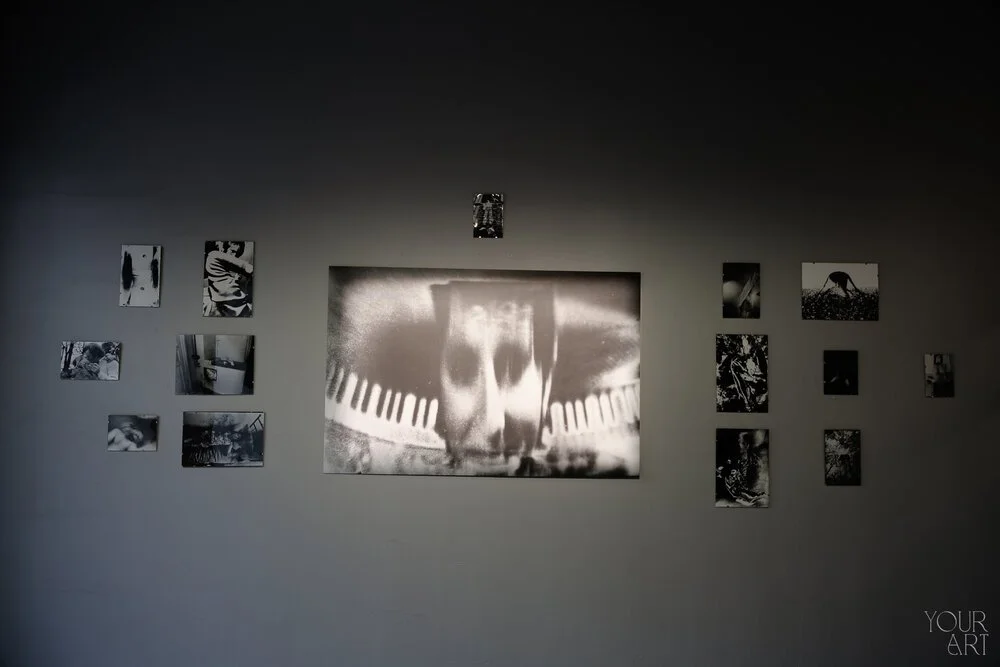
Freedom Street, a retrospective of the iconic Ukrainian artist Evgeny Pavlov, will open in Set. The exhibition will feature photographic series from 1970 to 2003, archival materials and videos. Most of the works of Evgeniy Pavlov in Kyiv will be on display for the first time.
Thanks to the practice of the Vremja group, co-founded by Yevgeniy Pavlov, as well as their manifesto Blow Theory, the Kharkiv School of Photography has become a prominent feature of contemporary art. The aim of the photographers was to document the most contradictory and traumatic manifestations of reality, events and plots that society usually tries to exclude from its conception of the world.
"Expanding the boundaries of creative gesture, consistently upholding the right to freedom of creativity in the context of daily, imperceptible control of power is the central thoroughfare that pervades the practice of Evgeny Pavlov since the early 1970s. Freedom Street tells the story of the artist's reaction to the taboo in Soviet society, relations with the authorities, and a private lyrical world filled with dialogues with masters of world art. The exposition includes experiments by Evgeniy Pavlov on the border of different genres and techniques: photography, video, painting, happening, which were parallel to the world practices in contemporary art", says the curator of the exhibition, art critic Maria Vtorushina.
The exhibition will include works from almost all series of Evgeniy Pavlov. In particular, the Violin series (1972) will be presented - a landmark mass shooting of a male nude; Delirium tremens (1983) - pictorial documentation of the state of "white fever"; The House of Life (1975-2003) is a history of everyday life of people and things in the late USSR and newly created Ukraine.
"There was such a strong sense of social despair that even love did not block him.
When we were involved in photography in the 70's, subjectivity was a bold step, ”says Evgeny Pavlov.
Evgeny Pavlov's works have been exhibited in most countries in Europe and America and are in museums and private collections in Spain, Italy, Lithuania, Germany, Poland, Russia, USA, Ukraine, France, Sweden, Japan. These include the Houston Museum of Fine Arts, the Cincinnati Museum of Contemporary Art, the Zimmerli Art Museum, University of the United States, the Multimedia Art Museum (Moscow), and the Museum of Photography in Siauliai (Lithuania).
Read more about the exhibition:
Настя Каліта. “Вулиця Свободи”: Як створювалася виставка Євгенія Павлова, YourArt, 13 Вересня 2019
Let The Garden Be.../ Let The Garden Be Without War
venue: America House, Kyiv, Ukraine
June 12, 2019 — July 7, 2019
curator: Kateryna Iakovlenko
artist: Alevtina Kakhidze
In her practice, Ukrainian artist Alevtina Kakhidze (born in 1973, Zhdanivka, Donetsk region) refers to the garden as to the small-scale form of politics. According to her vision, every gardener is a politician, and despite natural conditions, each of them chooses how to plant, where to plant, fills in and cares for his/her own garden the way he/she finds it right. This very metaphor of gardens and gardeners helps the author talk about global politics using non-violent communication tools.
In her text “Frames of War: When Is Life Grievable?” (2009) American researcher Judith Butler raises an important question: whose lives are we mourning for? Do all the dead receive the same amount of sorrow and misery? Are there those for whom we can’t feel sorry? In her own research papers, Butler develops through war ontology, learning about visual and textual dominants in the present media culture. Unlike Butler, Kakhidze raises a different question: What is tolerance in flora, why are some plants called wild grass, when indeed some plants can’t co-exist alongside with others, because they can take over the entire territory? Using her own gardening practice as a base, the author seeks to find out answers, consonant with the concerns that Ukrainians have for almost six years now: if the garden has its politics as well, how can a war be prevented in the garden?
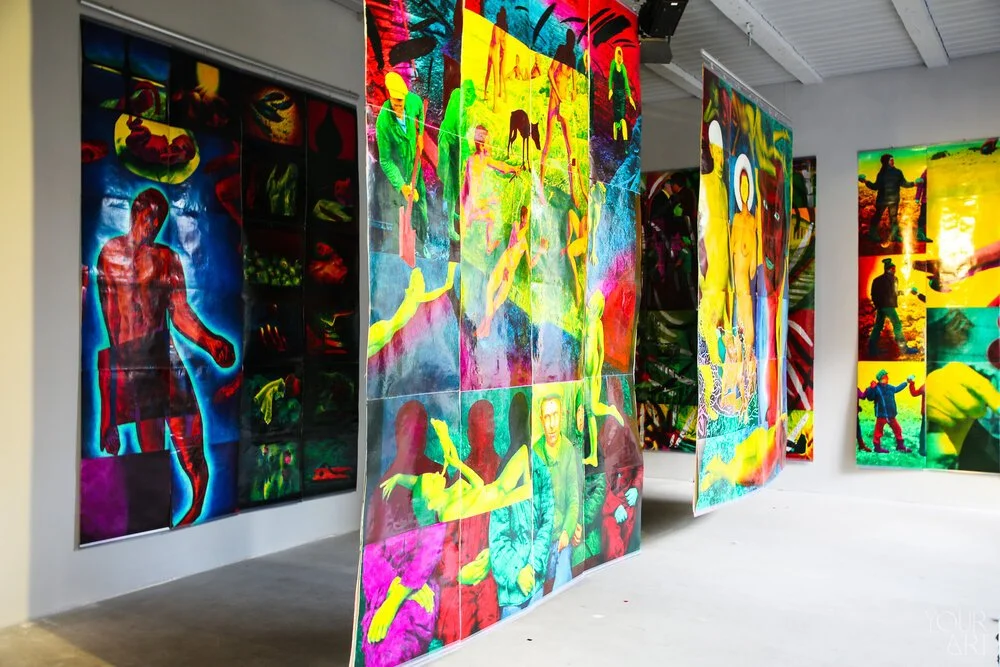
The idea of garden, politics and propaganda is felt through all of the works presented at the exhibit "Let the garden be…/ Let the garden be without war”. The starting point were the conceptual flowerbeds planted by the artist together with eco-and civic activists — Interesting, Useful, Tasty, Experimental Flowerbeds “Overcoming alienation", which are located the America House' garden and it’s cafeteria room. Alevtina Kakhidze offers visitors to take a look at the flowerbeds from the perspective of a gardener, viewer, ruler, servant, researcher and gifts receiver — these are the roles which the artist has highlighted within herself as a result of her many years-long experience in gardening.
Today`s audience gets used to consuming news while eating or drinking coffee at home or in public spaces while chatting with friends or colleagues. Unobtrusive and non-violent ways of speaking about war are manifested in the artist’s works. Graphics works, video and conceptual flowerbeds became a part of the Cafeteria interior for a little while, organically complementing already existing elements. Posters, which waves to gardening and cultivating orchards are placed in the America House Cafeteria. These non-political works refer to the whole culture of agitation and propaganda that has existed since the beginning of the twentieth century. The purpose of the posters is to work together in the spirit of dialogue with the news "All times", which, along with real-world news, are being broadcast on the TV screen. In addition, in the cafeteria room, two video interviews with gardeners from different regions of Ukraine are presented, as well as a story by the artist herself. These talks are part of the long-term project of the "Gardeners' Battle", which metaphorically raises issues of war and peace, world conflicts, hatred and repudiation. Thus, Kakhidze gives a voice to a social group whose opinion, to this point, was of little political significance, or was marginalized.
Alevtyna Kahidze (born in 1973 in Zhdanivka village, Donetsk region) is an artist, graduated from the Department of Graphic Arts at the National Academy of Fine Arts and Architecture, Academy of Jan van Eyck (Maastricht, The Netherlands). The winner of the Malevich Prize (2008), the winner of the competition among young artists and curators of the Center of Contemporary Art at NUKMA (2002). Co-founder of a private residence for foreign artists in the village of Muzychi, where she currently lives and works.